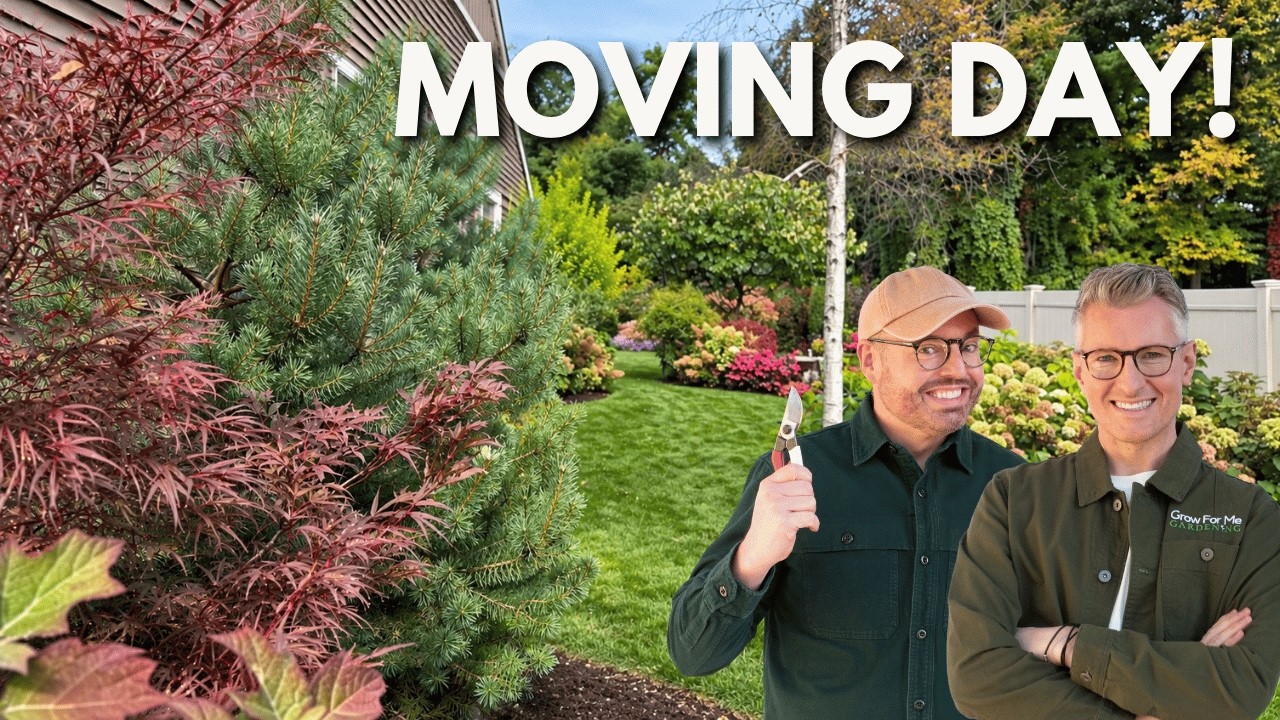
Sometimes, you plant something and realize later that it’s simply in the wrong spot.
Maybe the plant grew larger than expected. Maybe the light changed. Maybe you expanded a garden bed and suddenly something that used to make perfect sense at the front is sitting awkwardly in the middle. Or maybe you just changed your mind.
That’s gardening.
And fall is one of our favorite times to fix it.
We recently spent a full day rearranging the east side of our Zone 6A garden in Upstate New York, moving everything from hydrangeas and hostas to a Japanese maple, Hinoki cypress, climbing rose, and a collection of shade perennials.
If you’re wondering when to transplant plants in fall, how to reduce transplant shock, or whether you can move established shrubs and trees, here’s what we’ve learned.
Fall can be an excellent time to move many perennials, shrubs, and trees because cooler temperatures put less stress on plants than the heat of summer.
The soil is also still warm enough for roots to continue establishing even as top growth begins slowing down.
There’s another reason we love transplanting in fall: you can actually see how big everything got.
When you’re planting in spring, it can be surprisingly easy to forget the mature size of the plants around it. By fall, you can see exactly which plants are crowding their neighbors, disappearing underneath larger shrubs, or simply no longer working in the overall garden design.
That was definitely the case in this part of our garden. Plants that once sat at the front of the bed had become awkwardly positioned after we expanded the bed forward. Other plants were being swallowed by their neighbors.
Fall gave us the perfect opportunity to reassess the whole space.
Before you grab a shovel, take a minute to figure out why you want to move the plant.
Sometimes it really is as simple as aesthetics. But there may be a practical problem you can solve at the same time.
In our garden, we had several different issues happening:
Plants that were now out of proportion after expanding the garden bed
Shade plants being smothered by larger shrubs
A Japanese maple planted where it would eventually interfere with a window
A Hinoki cypress positioned directly in front of an air conditioning unit
Plants that weren’t receiving ideal light
A climbing rose that was difficult to access and maintain
No easy path for servicing our air conditioner
That last one is an important reminder: garden design has to work for real life.
We love a full, layered garden, but sometimes you still need to get to the house.
As part of this redesign, we tucked a small stepping-stone path beneath the surrounding plants so our air conditioner can be serviced without someone having to climb through the garden.
One of the first plants we moved was a Let’s Dance Sky View® bigleaf hydrangea.
Hydrangeas have relatively shallow root systems, so when digging one up, we focus more on getting a wide root ball than digging excessively deep.
Start digging far enough away from the base of the plant to preserve as many roots as possible. Work around the plant, carefully loosening the root ball until you can lift it from the ground.
We had a beautiful root ball on this hydrangea, even after it had been growing in this location for several seasons.
When replanting, position the hydrangea at approximately the same depth it was growing previously, backfill with your existing soil, and water it thoroughly.
And we mean thoroughly.
In our Zone 6A garden, we continue watering newly transplanted hydrangeas deeply throughout the fall, often until around Thanksgiving or whenever the ground begins freezing.
Cool weather does not mean newly transplanted plants don’t need water.
After transplanting, roots need consistent moisture while they begin settling into the surrounding soil.
We like to place the hose at the base of the plant and let it run slowly so water can soak deeply into the root zone rather than quickly running across the soil surface.
Keep an eye on rainfall and soil moisture throughout fall. Newly transplanted plants should not go into winter completely dried out.
Interested in how we keep watering low maintenance throughout the rest of the gardening season? Check out our Drip Irrigation for Beginners post and video!
We also made two much bigger moves: a Japanese maple and a slender Hinoki cypress.
Our Japanese maple was healthy. We loved the tree.
We just didn’t love where we planted it.
We had rushed to get it out of a container and into the ground the previous fall, and after living with it for a year, we knew the location wasn’t right. As the tree matured, it would eventually cover a window, and we weren’t enjoying it nearly as much as we could in another location.
That is the definition of right plant, wrong place.
When moving an established tree or shrub, preserving as much of the root system as reasonably possible can help reduce transplant stress. We dug a generously sized root ball around the Japanese maple before moving it approximately 15 feet to its new home.
Once replanted, make sure the tree isn’t sitting too deeply.
Look for the root flare, where the trunk begins to widen at the base. That flare should remain visible rather than being buried beneath soil or mulch.
Our Hinoki cypress got a new location too. Its original placement wasn’t allowing it to do much for the garden visually, and it was awkwardly positioned near the house.
Moving it into another section of the bed gave us the narrow evergreen structure we wanted without blocking important access around the house.
Sometimes moving a plant 10 or 15 feet can completely change the way you appreciate it.
Transplanting isn’t only about keeping plants alive. It’s an opportunity to make the entire garden better.
As we moved plants around, we looked at color, foliage, texture, repetition, mature size, and seasonal interest.
Under our willow, for example, we combined plants with different foliage colors and textures, including hostas, pulmonaria, Heucherella, Brunnera, and a gold-toned evergreen.
Rather than treating each plant as an individual specimen, we wanted this area to feel layered and blended.
Or, as we tend to call it, a mush.
We also repeated plants and colors throughout the bed. Repetition helps a densely planted garden feel intentional rather than chaotic.
This is one of our favorite ways to design a garden: instead of asking only, Where can I fit this plant?, ask:
What does this plant add to the plants around it?
A dark leaf can make a silver leaf more noticeable. Fine foliage can contrast beautifully with something broad and substantial. A gold evergreen can echo the chartreuse color of a nearby hosta.
Those combinations are what make a garden interesting even when nothing is blooming.
Many established perennials can also be moved successfully in fall, and this is a great time to rescue plants that have become buried underneath larger neighbors.
We moved several shade-loving perennials that had been disappearing beneath surrounding shrubs and tucked them into areas where they could contribute more to the overall planting.
In some cases, established perennials can also be divided while you’re moving them.
One of our Actaea plants had grown large enough that we were able to leave part of it in its original location and move another section elsewhere in the garden.
This is one of the best parts of gardening over time: your existing garden starts giving you more plants to work with.
Just remember that not every plant should automatically be divided simply because it can be. If you want the impact of a larger established plant in its new location, moving the root ball intact may make more sense.
This is where timing becomes a little more important.
Not every plant is equally well suited to a late-season move.
For example, we transplanted some Sprinter® boxwoods during this project, but late fall isn’t our preferred time to transplant broadleaf evergreens.
Evergreens continue losing moisture through their foliage during winter, even when the ground is frozen and their roots can’t easily replace that moisture. If you’re moving one later in the season, keeping it properly watered before the ground freezes becomes especially important.
When possible, give fall-transplanted evergreens plenty of time to begin establishing before winter conditions arrive.
One of the biggest lessons from this project had very little to do with digging technique.
You are allowed to change your mind.
Gardens aren’t static.
Plants grow. Trees create more shade. Garden beds expand. Your taste changes. You learn which plants perform well in your conditions and which ones don’t.
And sometimes a plant that looked perfect on paper just doesn’t work once you see it in the garden.
We removed plants. We moved plants that had only been planted the year before. We rearranged entire sections. We even moved a climbing rose from one structure to another because we thought its flowers would look better against the darker background of the house.
That isn’t a gardening failure.
It’s garden design.
Fall is an especially useful time to walk through your garden and ask yourself:
What isn’t working anymore?
You might be surprised by how much better the garden feels after moving only a handful of plants.
If you’re planning your own fall garden moving day, keep these basics in mind:
Transplant early enough that plants have time to begin settling in before the ground freezes.
Water plants before and immediately after transplanting.
Dig generously around established plants to preserve as much of the root system as possible.
Keep trees and shrubs at the proper planting depth.
Leave the root flare exposed when transplanting trees.
Continue monitoring soil moisture through fall.
Pay attention to the plant’s mature size, not just its current size.
Consider sun exposure, airflow, access, and surrounding plants before choosing the new location.
Use the opportunity to improve repetition, foliage contrast, and year-round structure.
Be more cautious when transplanting broadleaf evergreens late in the season.
Most importantly, don’t be afraid to experiment.
Gardening is a process. Sometimes you don’t know whether a plant is in the right spot until you’ve watched it grow there for a season or two.
Move it. Try something different. And give yourself something new to look forward to next spring.
Join our gardening journey and grow alongside us. From seed starting to full garden tours, we share tips, inspiration, and the joy of growing beautiful spaces.
We respect your privacy and will never share your information. Thanks for growing with us!
Get seasonal tips, behind-the-scenes from our garden, and be the first to know what we’re planting, pruning, and loving.
As a thank you, we’ll send you our favorite tried-and-true plants — the ones we grow in our own garden.