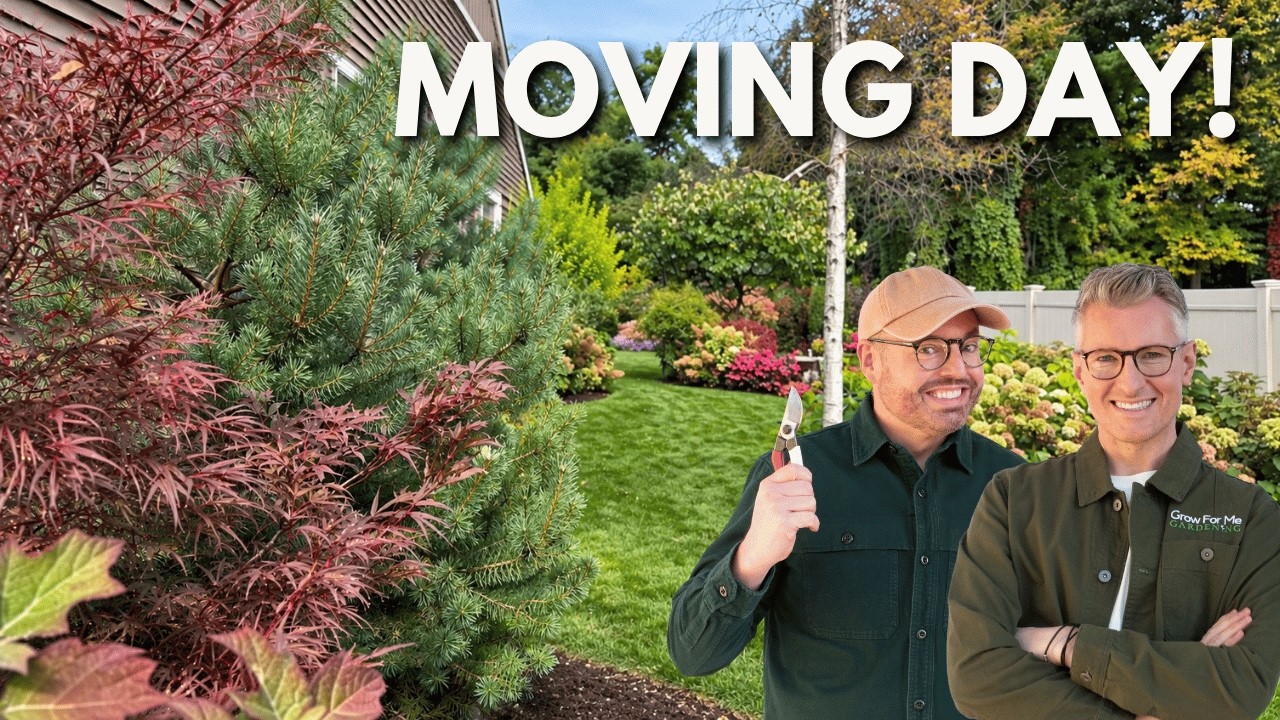
Fall is one of our favorite times in the garden. The temperatures are cooler, the garden is putting on its final show of the season, and there’s something satisfying about getting everything ready for winter.
But before we put away our gardening tools and settle in for the colder months, there are a few things we need to tackle.
Here in our Zone 6a garden in Upstate New York, winters can bring heavy snow, freezing temperatures, and some pretty brutal winds. Over the years, we’ve learned which plants need a little extra attention in fall, which ones are better left alone, and which tasks can wait until spring.
The good news? You don’t need to cut everything back or clean up every corner of your garden before winter arrives.
Here’s our fall garden checklist, including what we’re pruning, what we’re protecting, and what we’re leaving alone until spring.
Watch the video above to walk through our garden with us as we share our fall gardening to-do list. Here’s the checklist before we dive in:
FALL GARDEN CHECKLIST
✔️ Remove spent annual flowers
✔️ Identify hydrangeas before pruning
✔️ Trim vulnerable rose canes
✔️ Protect boxwoods from winter winds
✔️ Cut back selected grasses and perennials
✔️ Pull fall weeds
✔️ Continue watering new plantings
✔️ Winterize irrigation systems
✔️ Move tender plants to protected storage
✔️ Collect seeds from favorite flowers
✔️ Drain and protect water features
✔️ Store hoses and electronic timers
One of the simplest tasks on our fall garden checklist is removing annual flowers.
Annuals typically complete their life cycle in one growing season. They give us beautiful color and plenty of flowers throughout spring and summer, but once freezing temperatures arrive, their season is coming to an end.
In our garden, that means eventually pulling plants like:
Coleus
Annual salvia
Other seasonal flowering annuals
Some annuals, like coleus, will look pretty rough after the first frost. Others may hang on a little longer.
There’s no need to rush out and pull everything the moment temperatures begin to drop. We just make sure to get these plants out before winter so the beds are ready for fresh flowers in spring.
Hydrangeas are one of the plants we get the most questions about, especially when it comes to pruning.
The most important thing to understand is that not all hydrangeas should be treated the same way in fall.
Some bloom on new wood, some bloom on old wood, and some bloom on both. Knowing which type you have makes all the difference.
Smooth hydrangeas (Hydrangea arborescens) bloom on new wood, meaning they produce flowers on the growth that develops during the current season.
Examples include:
Invincibelle Sublime
Invincibelle Ruby
Invincibelle Spirit II
Incrediball
Incrediball Blush
In our garden, we cut these back in fall because of the heavy, wet snow we typically receive.
Those large flower heads can collect snow and ice, weighing the stems down until they bend or break.
To help prevent that damage, we use hedge trimmers to cut our smooth hydrangeas back to somewhere between knee and hip height.
This isn’t something every gardener needs to do in fall, but it’s a practical approach for our winter conditions.
Panicle hydrangeas (Hydrangea paniculata) also bloom on new wood.
In fall, we focus primarily on deadheading varieties with large flower heads that could collect heavy snow.
For example, Quick Fire Fab has substantial blooms that can become weighed down during winter storms. We make removing those flower heads a priority.
Other varieties, like Pinky Winky or Quick Fire, have more open, lacy blooms that may not collect as much snow.
We’re not doing detailed structural pruning in fall. That can wait until spring.
These are the hydrangeas we’re much more careful with.
Mountain hydrangeas (Hydrangea serrata): Our Tough Stuff Top Fun hydrangeas bloom on old and new wood. We leave them alone in fall to avoid removing flower buds for next season.
Oakleaf hydrangeas (Hydrangea quercifolia): Varieties like Gatsby Pink develop their flower buds on old wood. Those buds are already there, waiting for next year, so we don’t prune them in fall.
Bigleaf hydrangeas (Hydrangea macrophylla): Our Let’s Dance Skyview hydrangeas can bloom on old and new wood, but we still avoid cutting them back. You can remove a spent flower if you’d like to bring it inside, but avoid cutting farther down the stems.
Our general rule: Before pruning a hydrangea in fall, make sure you know which type you’re growing.
If you’re unsure, our Hydrangea Handbook is a great place to start. It walks you through the different hydrangea types and how to care for them. We also have a great blog post and video about hydrangea care here.
We grow quite a few roses, and our fall approach is relatively simple.
We don’t give them a major pruning before winter.
Instead, we walk through the garden and look for particularly long or arching canes that might be damaged by heavy snow.
For example, our Ancient Mariner and Reminiscent Pink roses can develop long stems that arch outward. If those stems look likely to bend or break under snow, we’ll shorten them.
For some of these roses, that might mean bringing the tallest canes down to around three feet.
We leave the shorter, sturdier growth alone.
Why? Because some winter dieback is possible, and we don’t want to remove too much healthy growth before winter even begins.
A few other things we do for our roses in fall:
Stop fertilizing: We stop feeding our roses well before winter so we’re not encouraging tender new growth.
Leave developing rose hips: We stop deadheading roses that produce attractive hips, sometimes as early as August, so we can enjoy them later in the season.
Remove diseased foliage when needed: If a rose has experienced significant black spot or other disease, we may remove affected foliage to help keep it from accumulating beneath the plant.
Protect against rabbits: We use black chicken wire cages around the bases of our roses to discourage rabbits from feeding on tender growth.
The goal isn’t to make every rose look perfectly pruned. It’s to help the plants make it through winter without unnecessary damage.
One of the biggest lessons from last winter was just how damaging cold, dry winter winds can be.
We lost sections of some of our boxwoods, not necessarily because of extreme cold alone, but because of winter desiccation.
Desiccation happens when evergreen foliage loses moisture during winter and the plant cannot replace that moisture quickly enough, particularly when the ground is frozen.
This year, we’re planning to try an anti-desiccant product such as Wilt-Pruf or Wilt-Stop.
These products create a protective coating on foliage that can help reduce moisture loss.
We’ve used this type of product in the past, but it’s something we had gotten away from over the years.
After last winter, we’re giving it another try.
If you grow boxwoods or other broadleaf evergreens in an area with harsh winter winds, this may be something worth considering. Be sure to follow the product’s instructions, including temperature and plant-specific application guidance.
This is one of those fall gardening decisions where everyone seems to have a different opinion!
We cut back our ornamental grasses in fall.
We know there are benefits to leaving ornamental grasses standing through winter. They provide habitat for wildlife, offer winter interest, and can look beautiful with a little frost or snow.
But in our garden, the taller grasses simply don’t hold up well.
Our Northwind switchgrass (Panicum) is a great example. It looks beautiful blowing in the fall breeze, but once wet snow arrives, it flops over.
Then we’re left with flattened grass, loose stems blowing around, and neighboring plants getting smothered.
So, we cut our ornamental grasses back to approximately 3–4 inches above the ground.
We’ve had good results with them returning each spring.
Not every perennial gets the same treatment.
Here’s how we approach some of the plants in our garden:
| Perennial | Our fall approach |
|---|---|
| Heuchera (coral bells) | Leave the foliage in place |
| Hardy hibiscus | Leave standing until spring |
| Garden phlox | Cut back low |
| Baptisia | Cut back low |
| Perennial salvia | Cut back |
| Serendipity allium | Optional; often leave for structure |
| Bee balm | May cut back, depending on conditions |
Our Cherry Truffles heuchera is a great example of something we leave alone. Its semi-evergreen foliage helps cover and protect the crown through winter.
We also leave our hardy hibiscus standing. Cutting its hollow stems in fall can leave openings where water may collect. We prefer to wait until spring, when new growth begins emerging, before removing the old stems.
Other perennials, like phlox and baptisia, can be cut back low.
But here’s something important: Perennial cleanup doesn’t have to be at the top of your fall to-do list.
If you’re short on time, there are more urgent things to tackle before freezing weather arrives.
Leaving some perennial stems and seed heads standing can also provide food and shelter for birds and beneficial insects throughout winter.
We know. You’re probably ready to put away the gardening gloves, grab a pumpkin spice latte, and enjoy the cooler weather.
But fall is actually one of the most important times to weed your garden.
Just like spring, fall often brings cooler temperatures and more consistent moisture. Those conditions are great for establishing new plants, but they’re also great for weeds.
If you let weeds settle in during fall, you may find yourself dealing with an even bigger problem in spring.
We focus on removing:
Perennial weeds that can survive winter and return next year
Annual weeds that have already developed seed heads
New weeds getting established in open garden beds
Taking care of these now can save a surprising amount of work when gardening season starts again.
This might be the most overlooked task on our entire fall garden checklist.
Just because the weather is cooler doesn’t mean your plants no longer need water.
Fall watering is especially important for trees, shrubs, and perennials planted during the current growing season.
We’re adding drip irrigation to a newly planted section of our garden that includes azaleas and calycanthus.
We want those plants to have enough moisture available as they establish their roots before the ground freezes.
In our Zone 6a garden, we may still be watering with a hose around Thanksgiving. During a particularly warm December, we might even continue watering closer to Christmas.
The important thing isn’t the date on the calendar. It’s the weather, soil moisture, and whether the ground has frozen.
We have both in-ground lawn irrigation and drip irrigation in our garden, and we handle them differently.
In-ground irrigation: We have our lawn sprinkler system professionally blown out in fall. Water left inside the pipes can freeze, expand, and damage the system.
Drip irrigation: Our perforated drip lines remain in the garden over winter. We do remove the electronic timer connected to the hose bib so its components aren’t exposed to repeated freezing and thawing.
If you have a drip irrigation system, follow the manufacturer’s winterization recommendations for your particular setup.
We also have a complete step-by-step drip irrigation blog post, video and freebie if you’re interested in adding a system to your garden.
Our lawn care routine is fairly simple.
We have a company handle seasonal fertilization, including a fall application, and we give the lawn a shorter final mowing before winter.
The idea is to avoid leaving excessively long grass that could mat down under snow.
For cool-season lawns, the exact mowing height and fertilizer timing should be appropriate for your grass type and local conditions. There’s no need to scalp the lawn.
Fall is also when we start deciding which plants are staying outside, which ones need to be planted in the ground, and which ones are coming indoors.
We often have plants left over from end-of-season sales that we haven’t gotten around to planting.
If we can’t get them into the garden before winter, many of them will spend the colder months in our garage.
Our garage has two features that make it particularly useful for overwintering dormant plants.
First, it’s unheated.
That allows the space to get cold enough for appropriate plants to enter dormancy while offering some protection from harsh winds and extreme outdoor conditions.
Second, it has windows.
Those windows allow natural light into the space, helping plants experience the changing daylight hours throughout the season.
We use the garage for certain potted hydrangeas, roses, and other plants that benefit from additional winter protection.
We also check the soil periodically and water sparingly as needed.
We learned last year that it’s possible to underwater plants in winter storage, so we’re planning to be a little more attentive this season.
Keep in mind that an unheated garage isn’t automatically suitable for every plant. Temperatures, light, and the plant’s cold tolerance all matter.
Some plants aren’t suited to spending winter in our cold garage.
Our mangaves, for example, come inside under grow lights.
We also bring our houseplants indoors before temperatures get too cold.
Before moving outdoor plants into your living space, it’s a good idea to inspect them carefully for insects and other pests.
Two final jobs on our fall garden checklist are collecting seeds for next year and protecting our outdoor water features.
Fall is a wonderful time to save seeds from plants you loved growing this year.
We’re especially excited about our Victorian Wedding zinnias from Floret. They have beautiful, soft coral tones, and we’d love to grow them again.
For zinnias, we look for flower heads that have dried on the plant.
Once they’re dry, we can break apart the heads and separate the seeds from the petals and other plant material, known as chaff.
For plants that naturally drop their seeds, we use a slightly different method.
We’ve been experimenting with small organza drawstring bags placed around pollinated flower heads.
We use these on plants like:
Blue vervain (Verbena hastata)
Verbena bonariensis
As the seed heads mature, the bags catch seeds that might otherwise fall to the ground.
It’s a simple way to collect seeds without having to constantly check whether they’re ready.
Once collected, make sure seeds are thoroughly dry before storing them in labeled containers in a cool, dry location.
Our garden has several water features, including a pondless waterfall, spillway bowl, and decorative fountains.
Because these aren’t designed to operate through our freezing winters, we shut them down before sustained freezing weather arrives.
For our pondless waterfall and spillway bowl, that means draining the water, cleaning the system, and removing the pumps for winter storage.
For our decorative fountains, we remove the water, clean them, allow them to dry, and add protective covers.
We also bring our Hoselink hose reels into the garage once overnight freezing temperatures become consistent.
Taking care of these things before winter helps protect the equipment and keeps everything ready for use next spring.
One of the things we’ve learned over the years is that preparing the garden for winter doesn’t mean every bed has to be completely cleaned out.
Some things really do need attention before freezing temperatures arrive, like protecting vulnerable plants, winterizing irrigation systems, and bringing tender plants indoors.
Other things can wait.
We leave plenty of plants standing, enjoy the remaining seed heads, and tackle perennial cleanup when we have time.
And of course, what works for our Zone 6a garden in Upstate New York may look a little different in your garden.
The goal is to understand what your plants need, prioritize the important tasks, and give yourself a head start on a beautiful garden next spring.
Thanks for growing with us!
Join our gardening journey and grow alongside us. From seed starting to full garden tours, we share tips, inspiration, and the joy of growing beautiful spaces.
We respect your privacy and will never share your information. Thanks for growing with us!
Get seasonal tips, behind-the-scenes from our garden, and be the first to know what we’re planting, pruning, and loving.
As a thank you, we’ll send you our favorite tried-and-true plants — the ones we grow in our own garden.