
Sometimes a container just doesn’t make it to the finish line.
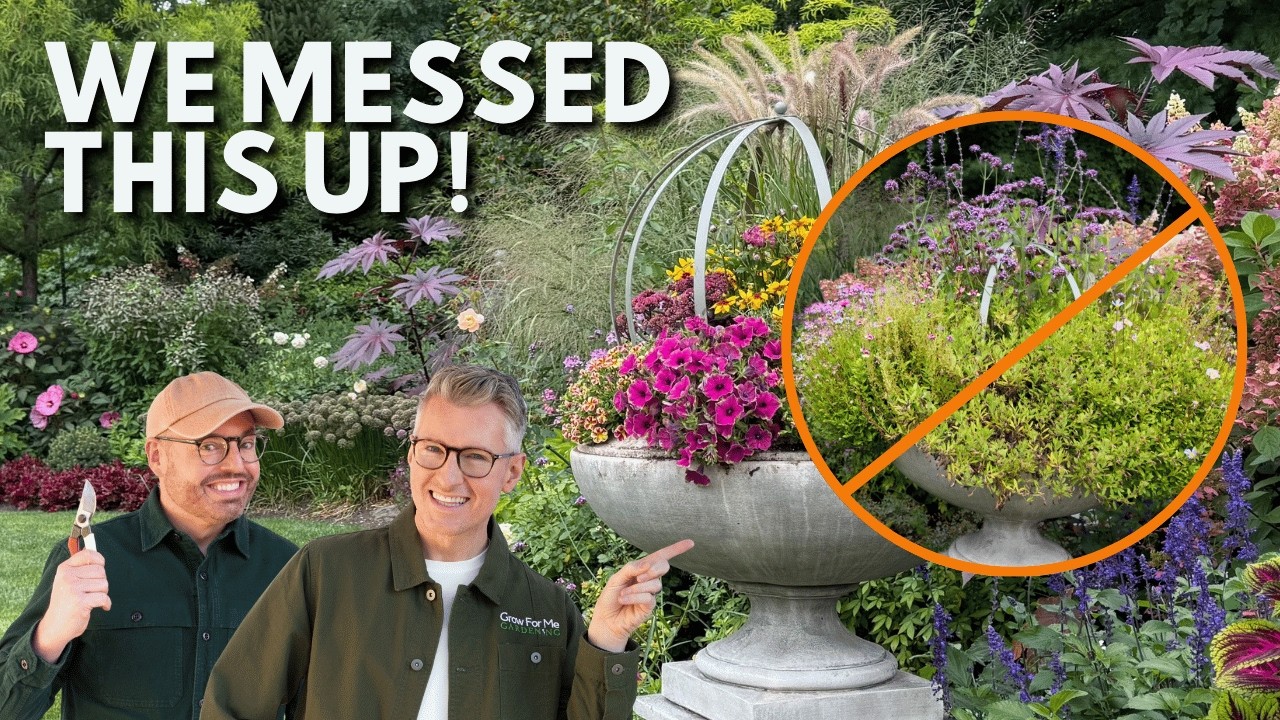
Our large garden urn (Jensen Urn and Greenwich Pedestal) looked beautiful for most of the summer, but by the beginning of September, things had gone downhill. The foliage was yellowing, the flowers were disappearing, and we still had more than a month before our average first frost here in our Zone 6 garden.
So we had two choices: try to revive what we had or embrace the opportunity to create something completely new.
You can probably guess which one we chose.
Before pulling everything out, we wanted to figure out what had actually gone wrong.
The first clue was the yellow foliage. Our initial thought was that the container was simply getting too much water. The drip irrigation for this urn is connected to one of our in-ground garden beds, which gets watered for about 45 minutes a day during the hottest part of summer.
As temperatures started cooling, that amount of water seemed like it might be too much for the container.
But once we removed the plants, we discovered another part of the problem: the entire container had become incredibly rootbound.
Roots had filled the urn and made their way down around the irrigation, contributing to poor drainage and creating almost a reservoir effect at the bottom.
It was a good reminder that watering isn’t always as simple as how long your irrigation runs. Drainage, root growth, temperature, and the size of your plants can all affect how much water a container actually needs.

Our second problem was much easier to diagnose.
Where did all the flowers go?
Budworms.
We had been fairly consistent about spraying for them throughout the summer, but after just a couple of weeks of forgetting, they found our containers and quickly took care of the blooms.
At this point, we technically could have cut the plants back hard, fertilized them, adjusted the irrigation and waited for a new flush of growth.
That would have been the practical option.
Instead, we went to the garden center.
When you think about fall container garden ideas, you might immediately picture mums, pumpkins and ornamental kale.
We wanted to do something different.
Since it was only September 1 and our average first frost isn’t until around mid-October, we potentially had another month or more to enjoy these containers. We decided to combine annuals and perennials with rich foliage, pinks, maroons and unexpected pops of yellow.
The result feels like fall without relying on the traditional fall color palette.
And because several of the plants are perennials, we’ll be able to move them into the garden when we’re finished with the containers.
Here’s the combination we used to create our late-season look:
Fireworks Pennisetum
This ornamental grass adds height, movement and beautiful pink tones. Instead of placing it directly in the center, we positioned it off-center to give the entire arrangement a slightly asymmetrical look.
Fall in Love™ Sweetly Anemone
We love using plants in containers that can eventually move into the garden, and this perennial was a perfect addition. Its color works beautifully with the pink and maroon tones throughout the planter.
Dressed Up™ ‘Evening Gown’ Heuchera
The dark, ruffled foliage adds depth and contrast while giving us a little bit of spill around the side of the urn.
Back in Black Sedum
Another perennial we already love in the garden. Its dark foliage ties into the heuchera, and its flowers provide late-season interest for pollinators.
Designer Threads™ ‘Golden Needle’ Coreopsis
This might be the plant that makes the entire combination work. The yellow flowers with deep maroon centers bring in the contrast the container needed.
Sometimes when you’re working with a lot of similar colors, you need something that makes everything else pop. White can do it. In this case, yellow did the job.
Supertunia® Picasso in Purple®
This was a fun annual to incorporate because its purple-pink flowers and green edging work so well with the other colors in the container.
Superbells® Holy Moly!®
Possibly one of the best plant names ever, but also a perfect addition to this combination. Its yellow and pink flowers tie together the bright yellow coreopsis and the deeper pink and maroon colors throughout the planter.

One of the best things about creating a container this late in the season is that you don’t have to plan for months and months of growth.
In spring, we have to think about what those tiny plants are going to look like in July or August.
In September? Not so much.
That means we can plant more tightly and create an arrangement that looks full almost immediately.
We still want every plant to have enough soil, water and room for its root ball, but we’re designing for the next several weeks rather than an entire growing season.
We also noticed something interesting when we finished these containers: we really liked seeing more of the urn itself.
Our summer planting had become extremely full and trailing. This new combination still has some plants that will spill slightly over the edges, but it doesn’t completely cover the container.
The shape of the urn becomes part of the design.
We still have height, fullness and movement, but the arrangement feels a little more structured.
And yes, we added our metal orb back into the larger container.
We weren’t both convinced at first, but once it was in place, it helped frame the intentionally asymmetrical planting and made the whole design feel more purposeful.
There was another lesson hiding in this fall refresh.
Some of our summer annuals probably would have looked much better at the end of the season if we had given them a significant haircut around the Fourth of July.
Plants like Supertunias and Superbells can be cut back during the summer to encourage a fresh flush of growth instead of allowing them to become overly long and trailing.
Did we do that this year?
No.
Will we remember next year?
We’ll see.
But if your containers tend to look tired and overgrown by August, a midsummer cutback may help extend their season considerably.
One reason we love incorporating perennials into seasonal containers is that they don’t necessarily have to be temporary.
Several of the plants in these urns can eventually be moved into our garden, including the anemone, heuchera, sedum and coreopsis.
We’ll either plant them in the landscape later this fall or, depending on the plant and weather, see how they handle remaining in the container a little longer.
It makes refreshing a fall planter feel a little more worthwhile when some of those plants can become permanent additions to the garden.
By late summer, it’s easy to start looking at tired containers and think the gardening season is basically over.
But here in our Zone 6 garden, September 1 can still leave us with six weeks before our average first frost.
That’s a lot of gardening time to give up.
If your summer containers are struggling, you don’t necessarily need to replace everything. Cutting plants back, adjusting irrigation and fertilizing may be enough to get another flush of growth.
But if you’re ready for something new, a fall container refresh is also a great excuse to experiment with plants and color combinations you might not normally use.
For us, apparently that means yellow, maroon, pink and absolutely no pumpkins required.
And this is just the beginning of fall planting season around here.


Join our gardening journey and grow alongside us. From seed starting to full garden tours, we share tips, inspiration, and the joy of growing beautiful spaces.
We respect your privacy and will never share your information. Thanks for growing with us!
Get seasonal tips, behind-the-scenes from our garden, and be the first to know what we’re planting, pruning, and loving.
As a thank you, we’ll send you our favorite tried-and-true plants — the ones we grow in our own garden.