There’s a familiar chill starting to creep into the air here in our Zone 6A garden in Upstate New York, but summer isn’t finished quite yet.
In fact, late summer is one of our favorite times to really look at the garden. Some plants are hitting their peak, hydrangeas are moving into their gorgeous end-of-season colors, pollinators are everywhere, and we’re starting to see which combinations really worked this year…and which ones might be getting a change.
Come along for a late summer garden tour and see what’s blooming, what surprised us, and what we’re already thinking about for fall.
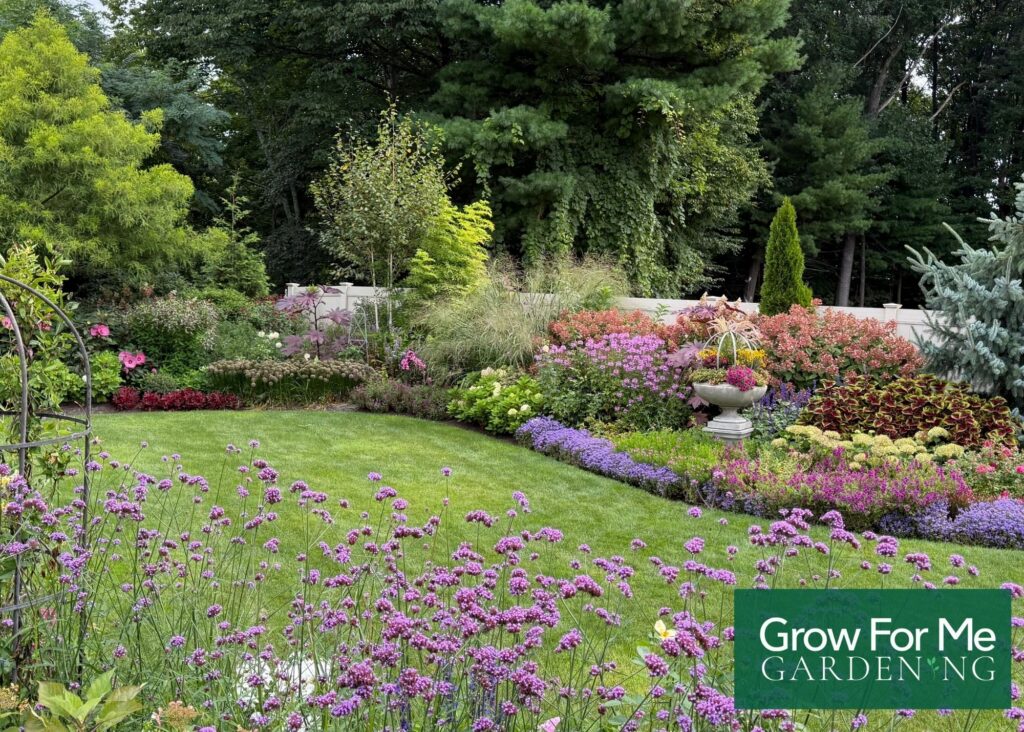
One of the things we love most about the late summer garden is how much color is still happening.
Our Power Ball® Hydrangea is looking especially beautiful paired with the dark foliage and flowers of Back in Black Sedum. The hydrangea has incredibly dense blooms, but the stems have stayed strong, and both plants are attracting plenty of pollinator activity.
Nearby, our native New York ironweed adds that vivid purple color and a completely different height and texture. We’ve also allowed plants like Verbena bonariensis to seed themselves around the garden, which gives some of our more structured areas a looser, more natural feel.
That balance between structure and a little bit of chaos has become something we really enjoy.
Of course, this wouldn’t be our garden without talking about hydrangeas.
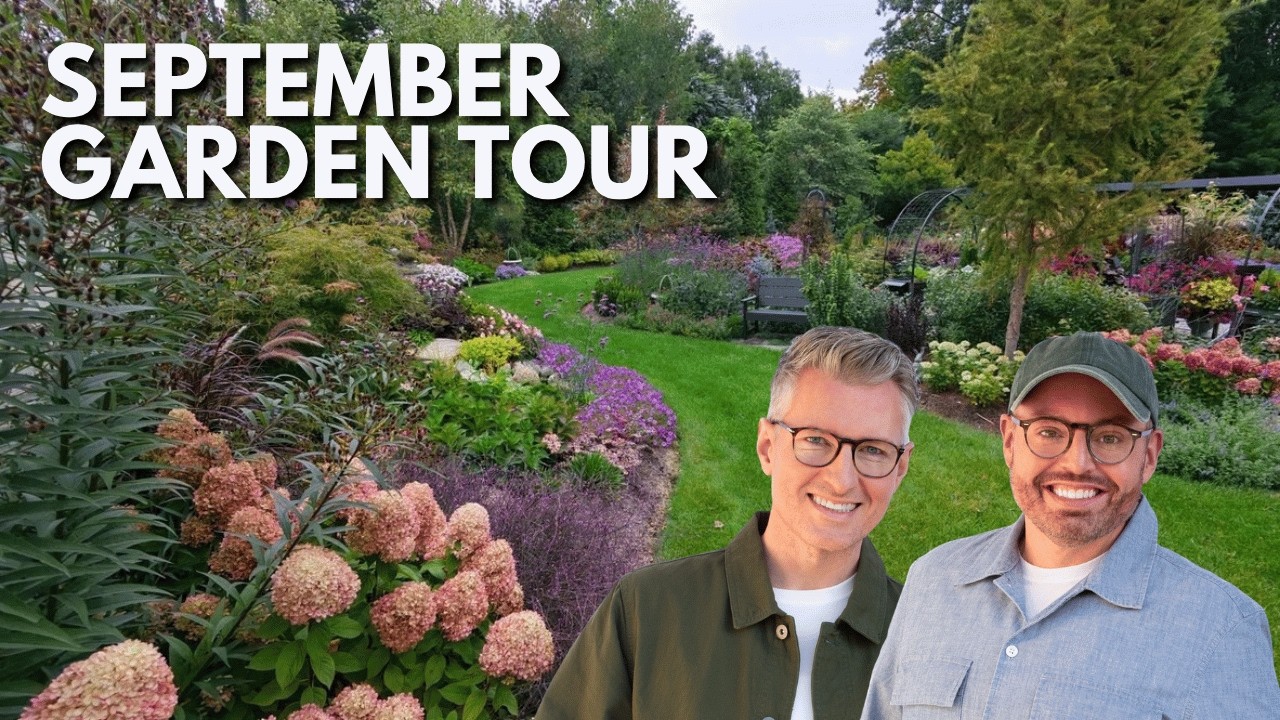
Late summer is when many of our panicle hydrangeas really start showing off. Little Lime Punch® develops an incredible fruit-punch color, while established Quick Fire® and Pinky Winky® Hydrangeas bring another layer of pink and red into the garden.
We’re also really impressed with Fire Light Tidbit®. This is a compact panicle hydrangea that stays very low and wide, making it a great option when you want the look of a hydrangea without a huge shrub.
And then there’s Puffer Fish® Hydrangea, which deserves more attention than it gets. Its enormous flower heads have a looser structure that allows pollinators to access the fertile flowers.
Not every hydrangea is having a perfect season, though. Our Vanilla Strawberry™ Hydrangea took a beating during storms and has flopped significantly. That’s gardening. Sometimes even a beautiful plant doesn’t behave exactly the way you hoped.
With so many types, bloom habits, mature sizes, pruning requirements, and sun needs, choosing the right hydrangea can get confusing fast.
Our Hydrangea Handbook + Planning Worksheets takes the guesswork out of growing hydrangeas, with the information we wish we had when we started growing them.
The hydrangea room really shows how different hydrangea varieties can look at the exact same point in the season.
Our Bobo® Hydrangeas are in their late-summer prime, while smooth hydrangeas are beginning to take on their faded end-of-season colors.
One of the biggest hydrangea standouts this year has been Let’s Dance Sky View®. We have a hedge that was planted just last fall, and it has continued producing new flowers even while older blooms are fading. You can see old flowers, fresh flowers, and new buds all on the plants at the same time.
Our Let’s Dance Blue Jangles® is also continuing to produce fresh flowers alongside older blooms.
And because we apparently can’t help ourselves, we’re already rearranging parts of the hydrangea room and making space for more hydrangeas this fall.
Every year there are a few annuals that make us immediately think, we need to grow that again.
Rockin’® Playin’ the Blues® Salvia continues to be one of those plants. It blooms for an incredibly long time and is constantly covered in pollinators.
Blue Artist® Ageratum has also been a rockstar. It stays tidy, flowers nonstop, and gives us that blue-purple color we love.
Another surprise was Torchlight® Coleus. The green edge and vibrant pink center have worked beautifully with nearby pink flowers, especially Oso Easy Peasy® Rose.
And sometimes annuals give you permission to experiment with color in ways you might not want to commit to permanently.
One of our favorite container combinations this year paired Superbena Peachy Keen, Meteor Shower® Verbena, Supertunia Bordeaux™, variegated Jazz Hands® Loropetalum, and Aromance® Mulberry Nemesia.
Peach, purple, pink, and variegated foliage isn’t a combination we use often, but this one absolutely worked.
One of the best parts of walking the garden at this point in the season is seeing which combinations came together the way we imagined.
A few favorites include:
This is one of the reasons we’re always encouraging gardeners to think beyond individual plants. A plant can be beautiful on its own, but the foliage, color, shape, and texture of the plants around it are what make a garden feel complete.
Want more help putting plants together? Download our free Garden Plant Pairing Guide for ideas you can use when planning your own beds and borders.
We always want to show the good and the not-so-good because every garden has both.
Budworms did quite a bit of damage to some of our petunias and Superbells after we fell behind on our regular treatment schedule. Rabbits helped themselves to roses and other plants we hadn’t protected, and deer managed to nibble several hydrangeas.
We also have plants that simply aren’t performing the way we want them to.
Our Tuff Stuff™ Hydrangeas haven’t been blooming reliably for us, so we’re planning to replace them. A few other shrubs are being moved or removed as we continue adjusting the garden.
That doesn’t necessarily mean they’re bad plants. Sometimes a plant just isn’t right for a particular location—or for what you want from that part of your garden.
And we are never afraid to change things.
Late summer might actually be one of the best times to evaluate your garden.
By now, you can see the mature size of your annuals, how shrubs have filled out, where you have too much of one color, where something is flopping, and where you suddenly have an empty spot after an earlier-blooming plant disappeared.
We also get to see whether the structure of the garden still works once everything is fully grown.
One area we redesigned this spring uses a more formal double hedge of Unplugged® Pink Salvia and Augusta® Lavender Heliotrope, but then loosens up with coleus, roses, verbena, cleome, and other plants around it.
That mix of structure and spontaneity feels very much like where our garden is heading.
Think of the permanent trees and shrubs as your furniture. Annuals are more like changing the pillows. You can experiment with them, change the colors, and try something completely different next year without redesigning the entire garden.
Just because summer is ending doesn’t mean garden season is over.
We have quite a few projects planned for fall, including moving plants, redesigning beds, adding new hydrangeas, and taking advantage of end-of-season garden center finds.
Fall can be a great time to plant because temperatures are cooler, plants experience less heat stress, and garden centers often have end-of-season sales.
We’ll be sharing all of those projects as they happen.
Until then, take a walk around your own garden and really look at it. What worked? What didn’t? What surprised you? And what are you already dreaming about changing next year?
Because if there’s one thing we’ve learned, it’s that a garden is never really finished.
Thanks for growing with us!
Join our gardening journey and grow alongside us. From seed starting to full garden tours, we share tips, inspiration, and the joy of growing beautiful spaces.
We respect your privacy and will never share your information. Thanks for growing with us!
Get seasonal tips, behind-the-scenes from our garden, and be the first to know what we’re planting, pruning, and loving.
As a thank you, we’ll send you our favorite tried-and-true plants — the ones we grow in our own garden.