
Fall is one of our favorite times to get plants in the ground. The temperatures are cooler, the garden is easier to work in, and it’s a great opportunity to look at the bigger picture and make changes before winter arrives.
This time, we had several projects happening at once: a brand-new garden bed, a new evergreen hedge, hydrangeas to transplant, shrubs that needed better homes, and a few new plants we’ve been waiting to try.
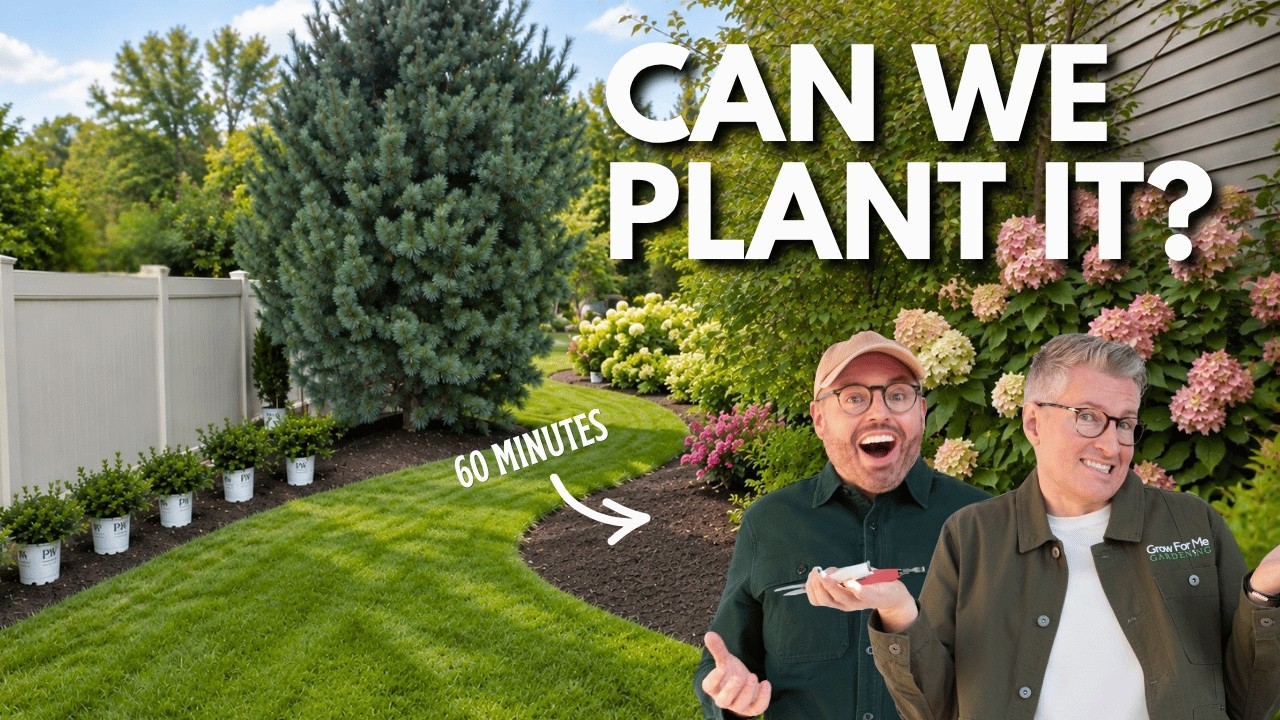
And because we’re weekend gardeners, we had about an hour of daylight to get it all done.
Fall can be a fantastic time for planting shrubs, trees and perennials. We also use this time of year to move established plants that aren’t quite working where we originally put them.
For this new garden bed, we started by removing the sod and adding a layer of compost. Our native soil is extremely sandy, so adding compost helps improve the soil as we establish the new bed.
One thing we aren’t doing is adding fertilizer to each planting hole. Heading into winter, our goal isn’t to encourage a flush of new growth. We’re focused on getting everything planted, watered in and settled before the cold weather arrives.
One of the biggest additions is a small hedge of Perfecto Mundo Double Pink azaleas.
These stay around 2–3 feet tall and wide and have beautiful glossy green foliage along with pink flowers and reblooming potential.
There is one catch: they’re listed as hardy to USDA Zone 6B, and our garden here in upstate New York is Zone 6A.
So yes, we’re pushing the zone a little.
But gardening sometimes involves a calculated risk. These azaleas are planted in a fairly protected location between the house, fence and our Vanderwolf pine. We’re hoping that little microclimate gives them enough protection to thrive.
When laying out a hedge like this, we like to position the center plant first, then the two outside plants, and finally fill in between them. And before planting everything permanently, stand back and look at it.
Plants always look different from 20 feet away than they do when you’re standing directly over them.
Fall planting isn’t just about adding new plants. It’s also a great opportunity to reconsider plants that aren’t quite working where they are.
Our Red Zeppelin® sweetshrub was one of those plants.
We absolutely love this shrub. It has gorgeous dark foliage and can eventually reach roughly 4–8 feet tall and 4–6 feet wide. But its original location wasn’t going to give it enough room to become the plant we know it can be.
So we moved it.
Its new location gives it more space and more sun, and that burgundy foliage looks incredible against the beige fence and the blue-green Vanderwolf pine.
This is one of our favorite garden design principles: right plant, right place.
Sometimes that takes a little trial and error.
As this new area started coming together, we could see the combination we were creating:
That mix of foliage colors and textures is just as important to us as flowers.
We also added another North Pole® arborvitae to this area. We already grow several throughout the garden, so adding another creates repetition and helps connect this new bed to the rest of the landscape.
Repetition is one of the easiest ways to make a garden feel intentional. You don’t need every bed to contain completely different plants. Repeating a shrub, tree, color or foliage texture helps your eye move through the garden.
Want more help figuring out which plants work well together?
Our free Garden Plant Pairing Guide walks you through some of the combinations we use to create contrast, repetition and balance in the garden.
Next up: hydrangeas.
We planted a grouping of five Tuff Stuff Top Fun® mountain hydrangeas, with three toward the front and two behind.
Tuff Stuff Top Fun is a reblooming mountain hydrangea that blooms on old and new wood and stays roughly 2–3 feet tall and wide. We already grow a hedge of these elsewhere in the garden, and they’ve put on a tremendous amount of growth.
Grouping five together should eventually create exactly what we want here: a big, beautiful pile of hydrangeas.
And yes, that is an official garden design term around here.
We also had a recently transplanted Pinky Winky Prime® hydrangea nearby that looked…less than impressive.
The foliage had crisped after being moved while the weather was still fairly hot and sunny. But a quick scratch of the stem revealed bright green tissue underneath.
That’s an important reminder: a stressed-looking hydrangea isn’t necessarily a dead hydrangea.
There’s a common misconception that hydrangeas want constantly wet soil.
They do appreciate consistent moisture, but they also need well-draining soil. Hydrangeas have relatively shallow root systems, so mulch can be especially helpful for retaining moisture around the roots.
What they don’t want is to sit in soggy soil.
We’ll also be reworking the drip irrigation in this bed so these plants can receive consistent water without keeping the soil waterlogged. For more info on setting up your own drip irrigation system, check out our Drip Irrigation Quick Start Guide here.
If hydrangeas are the reason you’re here, our Hydrangea Handbook goes much deeper into choosing, planting, pruning and caring for hydrangeas throughout the year.
We weren’t done with hydrangeas yet.
We also had six Let’s Dance Lovable® hydrangeas—three new plants and three already growing elsewhere in the garden.
Rather than leaving the existing plants where they were getting crowded by other perennials, we moved them and combined all six into one hedge.
We planted these fairly tightly because we want them to eventually grow together into a full mass of flowers and foliage.
This hedge also sits across from our Tuff Stuff Top Fun hedge, creating balance between the two sides of the garden.
That’s something we’ll be focusing on more as we continue working on these beds: finding balance and rhythm in the garden.
Not everything needs to be perfectly symmetrical, but repeating similar shapes, plant groupings and colors can make separate areas feel connected.
At one point, we considered adding a small drift of ornamental grass beneath the sweetshrub.
We put the pots in place.
We looked at them.
We moved on to another project.
And when we came back?
Nope.
We both hated it.
This is exactly why we like to place plants before digging whenever possible. You don’t have to make every decision immediately.
Set the pot down. Walk away. Look at it from different angles. Come back later.
Sometimes you realize it’s exactly what the space needed. Other times you realize you’re about to plant something you’ll end up moving six months from now.
We finished by relocating our Cinnamon Curls® dwarf birch into one of the newly expanded beds, where it has more room and fits much better into the overall design.
And there’s still plenty left to do.
We have gaps to fill, perennials to divide, drip irrigation to adjust and more plants waiting to go into the ground.
But that’s part of what we love about gardening.
You don’t have to finish an entire landscape in one weekend—or even one season. Plants grow. Conditions change. Your taste changes. And sometimes the plant you were convinced belonged in one spot ends up looking infinitely better somewhere else.
Gardening requires a little faith in the future.
For now, everything is planted, watered in and ready to settle into its new home before winter.
And we can already see what this garden is going to become.
Thanks for growing with us.
Join our gardening journey and grow alongside us. From seed starting to full garden tours, we share tips, inspiration, and the joy of growing beautiful spaces.
We respect your privacy and will never share your information. Thanks for growing with us!
Get seasonal tips, behind-the-scenes from our garden, and be the first to know what we’re planting, pruning, and loving.
As a thank you, we’ll send you our favorite tried-and-true plants — the ones we grow in our own garden.