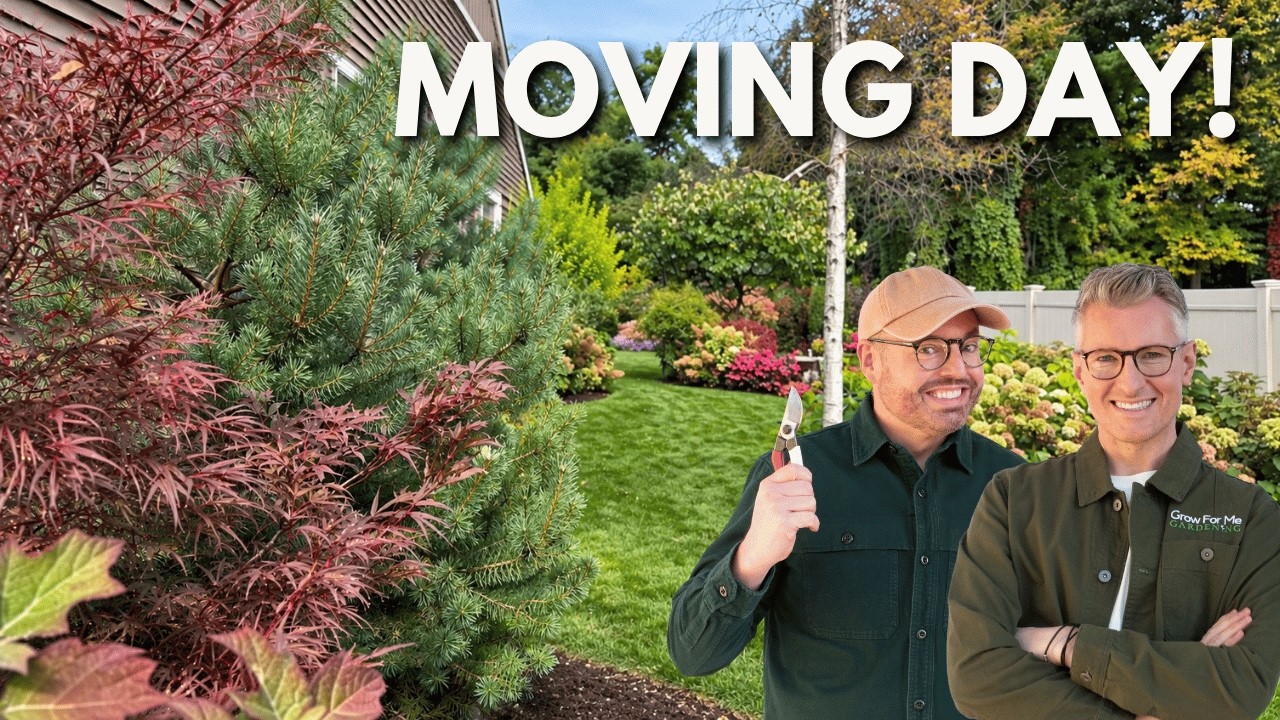
Every garden is full of surprises. Some plants exceed every expectation, while others leave us wondering what went wrong. And after another growing season in our Zone 6a garden in Upstate New York, we’ve certainly experienced both!
One of the things we love most about gardening is that there’s always something new to learn. Even after years of designing, planting, and experimenting in our landscape, we’re still surprised by how plants perform.
This year, we tried some new varieties, experimented with different planting combinations, and watched a few longtime favorites struggle. Some of our biggest successes came from plants we weren’t entirely sure about, while a few carefully planned additions simply didn’t deliver.
Today, we’re sharing five of our biggest garden successes and five of our biggest disappointments, along with what we learned and what we might do differently next season.
Whether you’re gardening in Zone 6a or somewhere completely different, we hope these experiences help you make more informed decisions in your own garden.
Let’s start with the good surprises! These five plants and planting combinations performed better than we expected, and some have already earned a place in our future garden plans.
If there’s one plant that truly shocked us this season, it was Let’s Dance Blue Jangles bigleaf hydrangea from Proven Winners.
We’ve grown plenty of hydrangeas over the years, but we’ve never experienced this intensity of blue in our garden before. The flowers were absolutely spectacular!
Let’s Dance Blue Jangles is a compact hydrangea, growing approximately two feet tall and wide, making it an excellent option for smaller garden spaces.
It’s hardy in Zones 5–9 and has another important characteristic: it blooms on both old and new wood.
That’s particularly exciting for those of us gardening in colder climates.
Bigleaf hydrangeas often develop flower buds on old wood that can be damaged by winter temperatures. Because Let’s Dance Blue Jangles can also produce flowers on new growth, it has another opportunity to bloom even if those older buds don’t survive.
We planted ours in a location that receives plenty of sunlight but gets protection from the intense afternoon sun thanks to the house. We also have drip irrigation providing consistent moisture.
We think that combination played an important role in its success.
And the foliage deserves some attention, too! The large, glossy leaves are beautiful even when the plant isn’t flowering.
What we learned: Don’t overlook compact hydrangeas when designing your landscape. The right variety, combined with appropriate sunlight and consistent watering, can make an incredible impact in a relatively small space.
Want to learn more about choosing and growing hydrangeas? Our Hydrangea Handbook is packed with information to help you understand different hydrangea types and grow them successfully.
This might be one of our favorite experiments of the entire growing season.
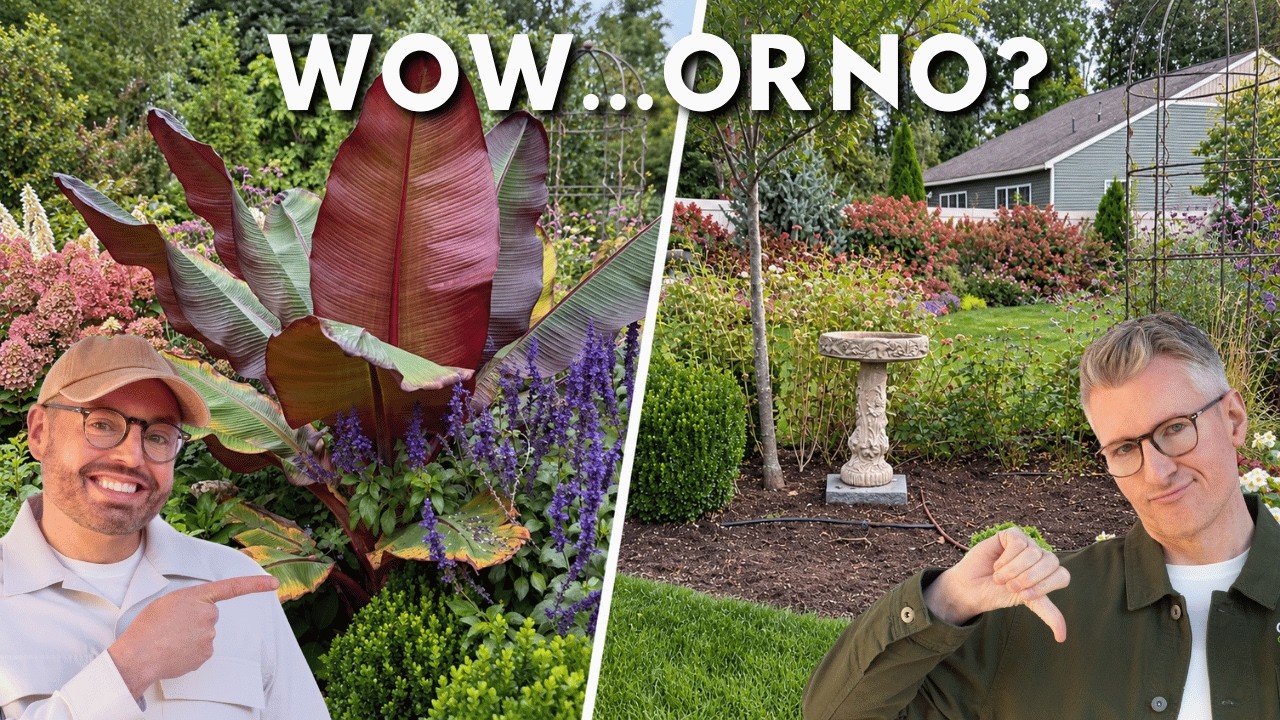
We were given a tiny red Abyssinian banana plant by a garden center friend. It arrived with just three leaves, and we weren’t entirely sure what to expect.
At first, it didn’t do much.
But once it started growing, it really took off!
By the end of the season, this little plant had transformed into a dramatic tropical focal point, with enormous leaves featuring deep red coloring and beautiful green variegation.
What surprised us most wasn’t just the size. It was how beautifully the foliage complemented the surrounding landscape.
The green tones echoed our weeping white spruce, while the rich red connected visually with the nearby Midnight Wine Shine weigela.
It brought a completely different texture and scale to the garden.
Our banana grew in full sun with drip irrigation, and it clearly loved its location.
Because red Abyssinian banana isn’t hardy in our Zone 6a climate, we treat it as an annual. While it’s possible to overwinter these plants indoors or store them dormant, there’s something fun about starting with a tiny plant and watching it transform throughout the season.
What we learned: Sometimes the most successful garden additions are the ones that push us outside our usual planting choices. Don’t be afraid to experiment with bold foliage, unusual textures, or tropical plants, even in a colder climate.
We’ve been experimenting more with growing roses in containers, and Reminiscent Ginger rose was one of our favorite discoveries.
We received three small plants in the spring and didn’t have an obvious place for them in the landscape.
So, we decided to try them together in a container near our fire pit.
What happened next was a wonderful surprise.
Not only did Reminiscent Ginger produce gorgeous flowers with a beautiful fragrance, but its growth habit created an unexpected cascading effect.
The branches swept gracefully over the edges of the container, creating a soft, romantic look that we don’t always get to appreciate when roses are planted in the ground.
And having those fragrant blooms right beside our seating area made the experience even better.
Reminiscent Ginger typically grows approximately two to three feet tall, and its graceful habit makes it particularly interesting for the front of a garden border.
We loved the container display, but three roses will eventually need more root space than this pot can provide.
Our plan is to move them into the landscape, where they’ll have room to mature.
We may try a single rose in the container next year, perhaps with a delicate annual planted beneath it.
What we learned: Containers can reveal a completely different side of a plant’s growth habit. Even plants you normally grow in the ground can become beautiful focal points when displayed in pots.
Sometimes a garden success comes from a plant that almost didn’t make it.
We needed annuals to fill the geometric planting squares beneath our trees, and by the time we were shopping, many of our usual choices were already gone.
That’s when we found Angelface Super Blue angelonia.
These plants weren’t particularly impressive when we first planted them. In fact, they looked so questionable that we decided to cut them back quite hard.
And that turned out to be exactly what they needed.
Within a short time, fresh growth began appearing, and the plants filled in beautifully.
By October, they were still producing an abundance of purple-blue flowers!
We planted nine angelonia in each grouping to maintain the structured square shape we wanted in the garden.
Their upright flower spikes added a lovely vertical texture without overwhelming the surrounding plants.
Another pleasant surprise was how healthy the foliage remained throughout the season.
And unlike many of our other garden beds, these plantings weren’t connected to drip irrigation. They received water from our overhead lawn sprinklers.
Despite that, they performed beautifully.
What we learned: Don’t give up on a struggling annual too quickly. Sometimes a hard cutback can encourage fresh, vigorous growth and turn a disappointing planting into one of the season’s biggest successes.
You know those garden ideas you dream about all winter?
You imagine the colors, textures, heights, and combinations, hoping they’ll all come together exactly as planned.
Well, this year, our large mixed containers actually did!
We designed these plantings around Carding Mill roses grown as tree standards, then surrounded them with a combination of flowering annuals and colorful foliage.
Our plant combination included:
Carding Mill roses for height, structure, and beautiful blooms
Superbena Peachy Keen for soft peach coloring
Meteor Shower verbena for airy purple flowers and vertical texture
Aromance nemesia for fragrance
Supertunia Bordeaux for rich, complementary color
Jazz Hands loropetalum for a dramatic foliage accent
The combination was everything we’d hoped for.
The peach tones of Superbena Peachy Keen worked beautifully with the Carding Mill roses, while the purple flowers provided contrast and movement.
And the fragrance was an added bonus!
What surprised us most was how well all the plants grew together.
Sometimes mixed containers look wonderful when first planted, but one vigorous variety eventually takes over, leaving the others struggling.
That didn’t happen here.
Everything maintained its place, and the containers remained attractive throughout the growing season.
They were planted in full sun with drip irrigation, and we didn’t even need to cut them back during the season.
We also did very little fertilizing during the second half of summer.
There was one unexpected problem, though!
One of our heavy containers actually sank into the warm asphalt driveway, sealing off its drainage. The container sat in excess water for a period of time before we discovered what was happening.
Thankfully, the plants recovered.
What we learned: Successful container combinations depend on choosing plants with compatible growing conditions and complementary growth habits. And no matter how beautiful your containers are, always make sure their drainage holes remain open!
Of course, not everything went according to plan.
And that’s gardening!
A disappointing plant isn’t necessarily a bad plant. Sometimes it’s simply the wrong variety for a particular location, climate, or design.
Here are five things that didn’t work the way we’d hoped this season.
We had such high hopes for this planting.
Our vision was a lush, romantic container featuring Penelope Lively roses paired with Lavender Queen butterfly pea vine climbing a beautiful green obelisk.
We started the butterfly pea seeds indoors under grow lights in March.
They germinated successfully, and we were excited to watch them grow.
But they were incredibly slow.
It wasn’t until August that the vines really started developing, and by the time they began flowering, our roses had already finished their first major flush of blooms.
The timing just didn’t work.
Later in the season, the vines also developed some unattractive foliage issues, making the entire planting less appealing than we’d envisioned.
We still love the green Queen Elegance obelisk from Agriframes, and we think a climbing plant could be beautiful in this container.
But next year, we’ll need to choose something that grows and flowers earlier in our relatively short growing season.
It also needs to be manageable enough to share space with the roses without overwhelming them.
What we learned: When combining plants in a container, matching their bloom times is just as important as coordinating their colors. A beautiful combination on paper won’t have the same impact if the plants peak at completely different times.
This was one of our biggest annual disappointments.
We were excited to try Outshine Orchid Pink Texas sage, expecting a season filled with beautiful pink flowers against its attractive foliage.
Unfortunately, that wasn’t our experience.
The plants produced an early flush of flowers, but it was relatively short-lived.
Then, for much of the summer, we were left with mostly green foliage.
It wasn’t until October that the plants really started flowering again.
And they looked beautiful!
The bees were enjoying the flowers, the color was lovely, and the plants had finally developed the fuller appearance we’d hoped for.
But in our Zone 6a garden, October is a little late for an annual to be reaching its peak.
We also noticed that the plants had grown considerably taller, with flowers appearing on the newer growth.
Could they have benefited from a different fertilizer routine or growing conditions? Possibly.
We’re not entirely sure.
What we learned: Not every plant marketed as a flowering annual will provide continuous color in every climate. Pay attention to when a plant actually performs in your garden, not just how it looks in promotional photos.
We planted three Steady Eddie viburnums because we loved the idea of having white flowers throughout the growing season.
The promise of repeat blooming was particularly appealing.
Unfortunately, after two growing seasons, the plants simply weren’t producing the flowers we’d expected.
And it wasn’t for lack of trying.
We evaluated their growing conditions, made adjustments, and even increased the drip irrigation this season.
They had adequate light, water, and compost mulch.
But the blooming performance never improved enough to justify the space they occupied.
And these weren’t small shrubs!
They had grown large enough to crowd neighboring plants, including our beautiful Snowfire aronia.
Ultimately, we decided to remove all three viburnums.
We’re planning something new for this space, ideally another plant with beautiful white flowers.
What we learned: Sometimes the best garden decision is knowing when to move on. If a plant has had sufficient time and appropriate care but still isn’t delivering what you need, replacing it can be the right choice for the overall design.
We love lavender.
The flowers, fragrance, texture, and romantic cottage garden appearance are hard to resist.
That’s why we were excited to plant Sweet Romance lavender in the structured planting squares beneath our trees.
We hoped this variety would be successful despite the challenges of our Upstate New York climate.
But lavender has always been difficult for us.
Our garden experiences humid summers, frequent rain, and conditions that can keep the soil too moist for lavender to thrive.
And unfortunately, Sweet Romance struggled, too.
Only about half of our plants returned after winter.
Even without dedicated drip irrigation, the combination of rainfall and overhead sprinkler watering appeared to provide more moisture than the lavender preferred.
Rather than lose the surviving plants, we relocated them to a different part of the garden.
Our green wall area receives full sun, plenty of wind, and no drip irrigation, so we’re hoping those conditions will be a better fit.
In the original planting squares, we replaced the lavender with Strongbox inkberry holly.
And we actually love the new look!
The inkberry provides a more structured, grounded appearance while still complementing the surrounding garden.
We’ve paired it with the beautiful Angelface Super Blue angelonia, creating a combination of evergreen structure and seasonal color.
What we learned: Even a wonderful plant variety can’t always overcome unsuitable growing conditions. Lavender generally prefers excellent drainage and doesn’t appreciate consistently wet conditions. Sometimes changing the plant is easier than trying to change the environment.
Our final disappointment is probably the hardest one to share.
We’ve had our eastern redbud tree for approximately six years, and it’s become an important part of the garden.
Over time, we’ve carefully shaped and lifted its branches to create a beautiful arching effect through the landscape.
It provides shade, structure, and a sense of maturity that takes years to establish.
Then, this summer, we noticed something unusual.
One of the large branches was hanging much lower than normal, almost touching a nearby James Austin rose.
When we investigated, we discovered that a major section of the tree had split.
We removed the damaged branch and, following advice from a trusted horticultural friend, applied pruning sealer to the exposed area.
Unfortunately, the split may extend farther down into the tree than we’d initially realized.
Now we’re facing a difficult decision.
Do we remove the tree this fall and begin planning for a replacement, or wait and see whether it can recover?
Because the tree is such an important part of the garden’s design, replacing it won’t be simple.
We’d love to find something with large, bold foliage and a graceful, vase-shaped growth habit that would allow us to recreate the arching effect we’ve worked so hard to establish.
Ideally, we’d also love to consider another native tree suitable for Zone 6a.
For now, we’re evaluating our options.
What we learned: Trees are long-term investments in a landscape, and structural damage can change a garden design unexpectedly. When a mature tree develops a significant split, it’s important to evaluate its structural safety and long-term viability before deciding what comes next.
Looking back at our biggest garden successes and failures, one thing stands out: the best garden isn’t necessarily the one where everything goes according to plan.
It’s the one where we’re willing to observe, experiment, and adapt.
This season reminded us of several important gardening lessons:
1. Growing conditions matter more than plant labels. A plant that performs beautifully in one garden may struggle in another because of differences in sunlight, moisture, soil, or climate.
2. Bloom timing can make or break a planting combination. Coordinating when plants flower is essential, particularly in gardens with shorter growing seasons.
3. Foliage can be just as impactful as flowers. Our red Abyssinian banana was a perfect example of how dramatic leaves can completely transform a space.
4. Don’t underestimate the power of pruning and patience. Our angelonia looked questionable early in the season but became one of our most reliable flowering annuals after a hard cutback.
5. It’s okay to change your plans. Removing an underperforming shrub or relocating a struggling perennial isn’t a failure. It’s part of creating a garden that works for you.
And perhaps most importantly, gardening should still be fun!
Some of our favorite moments this year came from trying plants we’d never grown before and discovering something completely unexpected.
We’re already thinking about what we’ll repeat, what we’ll change, and what new experiments we’ll try next season.
There’s a good chance we’ll grow another red Abyssinian banana. We’d love to find more opportunities to use Angelface Super Blue angelonia, and our mixed rose containers have certainly inspired us to keep experimenting with new combinations.
We’re also considering different planting options for the spaces where things didn’t work out, including finding the right replacement for our Steady Eddie viburnums and deciding what to do about our eastern redbud.
But that’s part of what makes gardening so exciting.
Every season gives us new information, new ideas, and another opportunity to create something beautiful.
Thanks for growing with us!
Join our gardening journey and grow alongside us. From seed starting to full garden tours, we share tips, inspiration, and the joy of growing beautiful spaces.
We respect your privacy and will never share your information. Thanks for growing with us!
Get seasonal tips, behind-the-scenes from our garden, and be the first to know what we’re planting, pruning, and loving.
As a thank you, we’ll send you our favorite tried-and-true plants — the ones we grow in our own garden.