If you’ve ever fallen in love with a garden design only to realize it just doesn’t work in your climate, you’re not alone.
That was exactly our experience with the beds beneath two of our favorite specimen trees.
After being inspired by the beautiful fruit trees underplanted with lavender at King Charles’ gardens in England, we decided to recreate the look in our own Zone 6A garden in Upstate New York. It was beautiful—for a while.
Between our humid summers, overhead irrigation, and cold winters, the lavender simply wasn’t happy.
Rather than forcing plants to grow where they didn’t want to, we decided to choose a boxwood alternative that actually thrives in our conditions.
The answer? Strongbox Inkberry Holly.
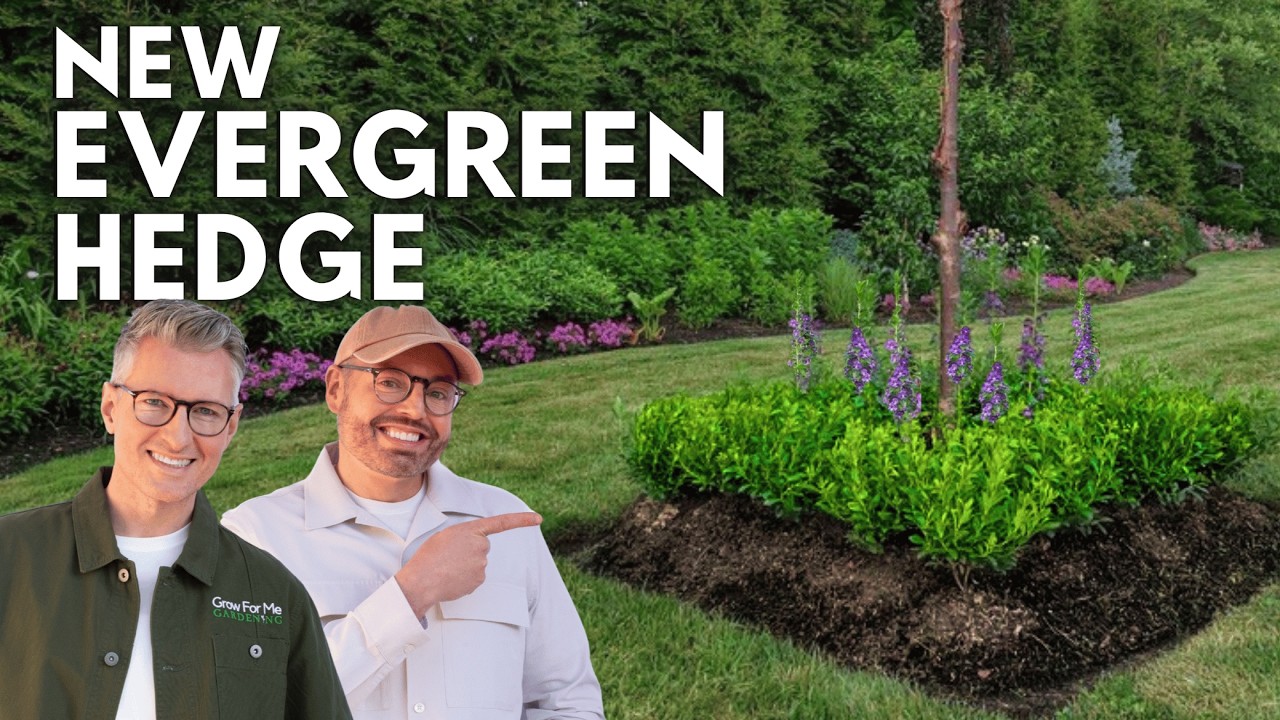
Paired with colorful Angelonia, it’s going to give these beds year-round structure with beautiful summer color—and far less maintenance.
Our square beds surround a Paperbark Maple and a Princeton Sentry Ginkgo, creating two focal points in the garden.
Originally, we envisioned neat lavender hedges beneath each tree. Unfortunately, our growing conditions weren’t ideal.
The combination of:
made it difficult for the lavender to survive.
Instead of trying again with another plant that prefers Mediterranean conditions, we looked for a boxwood alternative better suited to our climate.
Sometimes the best gardening decision isn’t finding the prettiest plant—it’s finding the right plant.
Strongbox Inkberry Holly (Ilex glabra) checked every box we were looking for.
It offers:
Unlike traditional boxwoods, Strongbox has a softer, more natural appearance. You can lightly shape it if you’d like, but it isn’t meant to become a perfectly rigid hedge.
That’s exactly the look we wanted for these beds.
That depends on your garden.
If your landscape has consistently wet soil, overhead irrigation, or high humidity, Strongbox Inkberry Holly may actually outperform traditional boxwoods.
It’s an excellent boxwood alternative because it tolerates moisture much better while still providing year-round evergreen structure.
It’s a great choice if you’re looking for:
One thing we appreciate is that it grows at a moderate pace. It won’t outgrow its space overnight, making it much easier to maintain over the years.
One of the questions we get most often is how to keep a hedge looking straight without measuring every single plant.
Our favorite method is surprisingly simple.
We always start by planting the four corner shrubs first.
Next, we plant the center shrub on each side.
Finally, we work toward the middle by planting the remaining shrubs between those established points.
Instead of trying to line up sixteen plants all at once, you’re simply filling in smaller sections. It’s quicker, less stressful, and the finished hedge still looks beautifully balanced.
And honestly, gardens don’t need mathematical perfection to be stunning.
We planted one-gallon Strongbox Inkberry Hollies using our standard planting process.
For each shrub we:
Even though we’d just had several summer storms and the soil was already wet, we still watered everything in.
Watering after planting helps settle the soil around the roots, eliminates air pockets, and gives every shrub the best possible start.
Yes—but only under the right conditions.
Strongbox is a female Inkberry Holly.
If it’s planted near a compatible male pollinator, such as Proven Winners’ Squeeze Box® Inkberry Holly, it will produce the small black berries that give Inkberry Holly its name.
Without a male pollinator, you’ll still enjoy the beautiful evergreen foliage—you just won’t see berries.
A fun bit of history: during the Civil War, the berries were crushed to make ink for writing letters home.
Once our evergreen framework was planted, we wanted something to provide vibrant summer color.
We chose Angelface Super Blue Angelonia, and it was the perfect finishing touch.
We love Angelonia because it:
The rich purple flowers pair beautifully with the glossy green foliage of the Strongbox Inkberry Holly.
Sometimes all a garden needs is a strong evergreen foundation with a splash of seasonal color.
One of the biggest lessons we’ve learned over the years is that gardens don’t have to be perfect to be beautiful.
There was a time when we probably would have obsessed over making these squares perfectly symmetrical.
Now?
We’re much more interested in how the garden feels than whether every shrub is exactly one inch apart.
Choosing plants that naturally thrive in your conditions is one of the best ways to create a landscape that’s both beautiful and easy to maintain.
That’s exactly why we chose this boxwood alternative instead of trying to make lavender work where it simply didn’t want to grow.
We’re excited to watch these beds mature over the coming seasons.
The Strongbox Inkberry Holly will slowly grow together to form soft evergreen borders, while the Angelonia provides colorful blooms all summer long.
Most importantly, we’ve replaced struggling plants with ones that are much better suited to our climate.
If you’re looking for a dependable boxwood alternative that thrives in humid climates, tolerates moist soil, and provides year-round evergreen structure, Strongbox Inkberry Holly is definitely worth considering.
Sometimes the best garden upgrades aren’t about adding more plants—they’re about choosing the right ones.
Yes. Strongbox Inkberry Holly is an excellent boxwood alternative, especially in gardens with humid summers or consistently moist soil. It provides evergreen structure with a softer, more natural appearance than traditional boxwoods.
Yes. It grows well in full sun but also tolerates part shade.
Spacing depends on how quickly you’d like your hedge to fill in. Closer spacing creates a fuller hedge sooner, while wider spacing allows each shrub to mature individually.
Yes. One of the biggest advantages of Inkberry Holly is its ability to thrive in moist soils where many evergreen shrubs struggle.
Yes. Strongbox Inkberry Holly is an evergreen shrub that keeps its glossy green foliage year-round, providing structure and color even during the winter months.
Angelonia is an excellent companion plant. It adds colorful blooms and vertical interest while the evergreen shrubs provide year-round structure.
Join our gardening journey and grow alongside us. From seed starting to full garden tours, we share tips, inspiration, and the joy of growing beautiful spaces.
We respect your privacy and will never share your information. Thanks for growing with us!
Get seasonal tips, behind-the-scenes from our garden, and be the first to know what we’re planting, pruning, and loving.
As a thank you, we’ll send you our favorite tried-and-true plants — the ones we grow in our own garden.