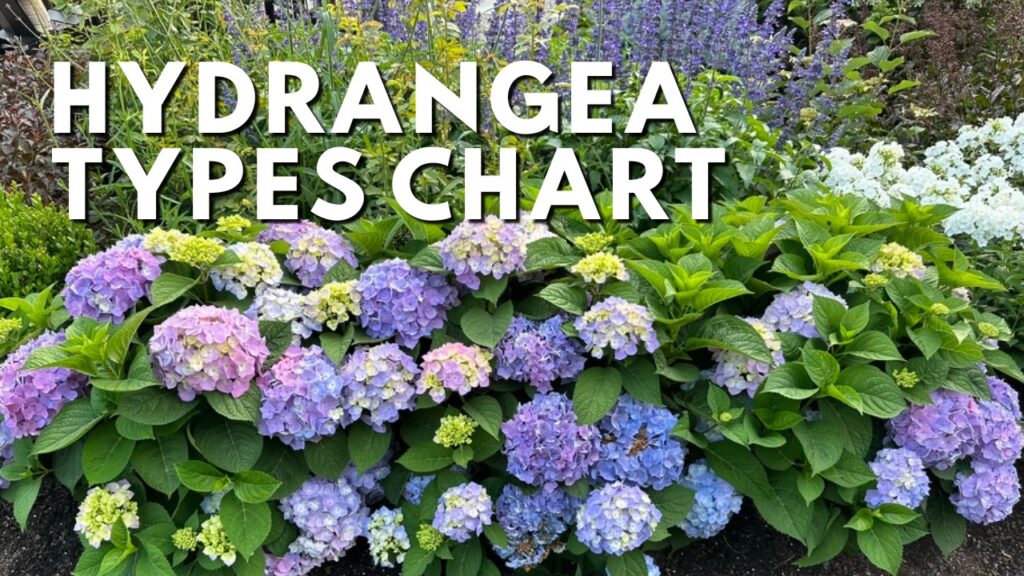
Hydrangea types chart - purple hydrangea

Hydrangea Types Chart: Identify, Prune, and Grow Hydrangeas with Confidence

If you’ve ever wondered why your hydrangea didn’t bloom—or felt unsure about when to prune—you’re not alone.

The truth is, success with hydrangeas comes down to one simple thing:

👉 Understanding the type you’re growing

That’s exactly why we created this hydrangea types chart—to give you a clear, quick way to identify your hydrangeas and understand how they grow.

Get the Free Hydrangea Quick Reference Chart

Want a printable version you can save and come back to all season?

👉 Download the Hydrangea Quick Reference Guide here

This chart makes it easy to:

  • identify your hydrangea type
  • understand bloom timing
  • know whether (and when) to prune
  • choose the right plant for your space

The 5 Main Types of Hydrangeas (Quick Overview)

All hydrangeas fall into five main categories. Once you know which one you have, everything else becomes much easier.

Panicle Hydrangeas (Hydrangea paniculata)

  • Bloom on new wood
  • Thrive in full sun
  • Very reliable bloomers
  • Examples: Limelight, Bobo

Smooth Hydrangeas (Hydrangea arborescens)

  • Bloom on new wood
  • Tolerate part sun
  • Soft, rounded blooms
  • Examples: Annabelle, Incrediball

Bigleaf Hydrangeas (Hydrangea macrophylla)

  • Bloom on old wood (sometimes both)
  • Prefer morning sun, afternoon shade
  • Can change color based on soil pH
  • Examples: Endless Summer, Nikko Blue

Mountain Hydrangeas (Hydrangea serrata)

  • Similar to bigleaf, but more cold-hardy
  • Bloom on old wood
  • Smaller, more delicate flowers

Oakleaf Hydrangeas (Hydrangea quercifolia)

  • Bloom on old wood
  • Known for foliage and fall color
  • Thrive in part shade

Why This Chart Matters (Pruning + Blooming)

One of the biggest mistakes gardeners make is pruning at the wrong time.

Here’s the key:

  • Old wood hydrangeas (bigleaf, mountain, oakleaf)
    → Prune at the wrong time = no blooms
  • New wood hydrangeas (panicle, smooth)
    → Much more forgiving


This is why identifying your hydrangea type is the most important first step.

👉 Grab the chart so you can reference it anytime

How to Use This Hydrangea Chart in Your Garden

Once you know your type, you can start making better decisions about:

  • where to plant
  • how much sun your hydrangea needs
  • when to prune
  • how to get fuller, more reliable blooms


In our own Zone 6A garden, we use this exact framework to manage more than 200 hydrangeas—and it completely changed how we approach planting and care.

Want to Go Deeper? (Full Hydrangea Handbook)

This chart is the quick version—but there’s a lot more to hydrangeas once you get into the details.

If you want help with:

  • exact pruning timing by type
  • confidently identifying specific varieties
  • troubleshooting why your hydrangea isn’t blooming
  • and especially how to design with hydrangeas in a real garden


👉 You can find all of that in our full Hydrangea Guide

Inside, we walk through how we actually use hydrangeas in our own garden to create layered, hydrangea-forward plantings that feel full, balanced, and intentional.

Final Thoughts

Hydrangeas aren’t complicated—but they are specific.

Once you understand the type you’re growing, everything else becomes easier.

Start with the chart, use it often, and build from there.

👉 Download your Hydrangea Quick Reference Guide here

Latest Garden Adventures

Hydrangea types chart - purple hydrangea
PondlessWaterfallSpringOpening
Container Roses Zone 6

Grow With Us All Season Long

Join our gardening journey and grow alongside us. From seed starting to full garden tours, we share tips, inspiration, and the joy of growing beautiful spaces.

We respect your privacy and will never share your information. Thanks for growing with us!

0
    0
    Your Cart
    Your cart is emptyReturn to Shop

    Join our garden community 🌿

    Get seasonal tips, behind-the-scenes from our garden, and be the first to know what we’re planting, pruning, and loving.
    As a thank you, we’ll send you our favorite tried-and-true plants — the ones we grow in our own garden.