
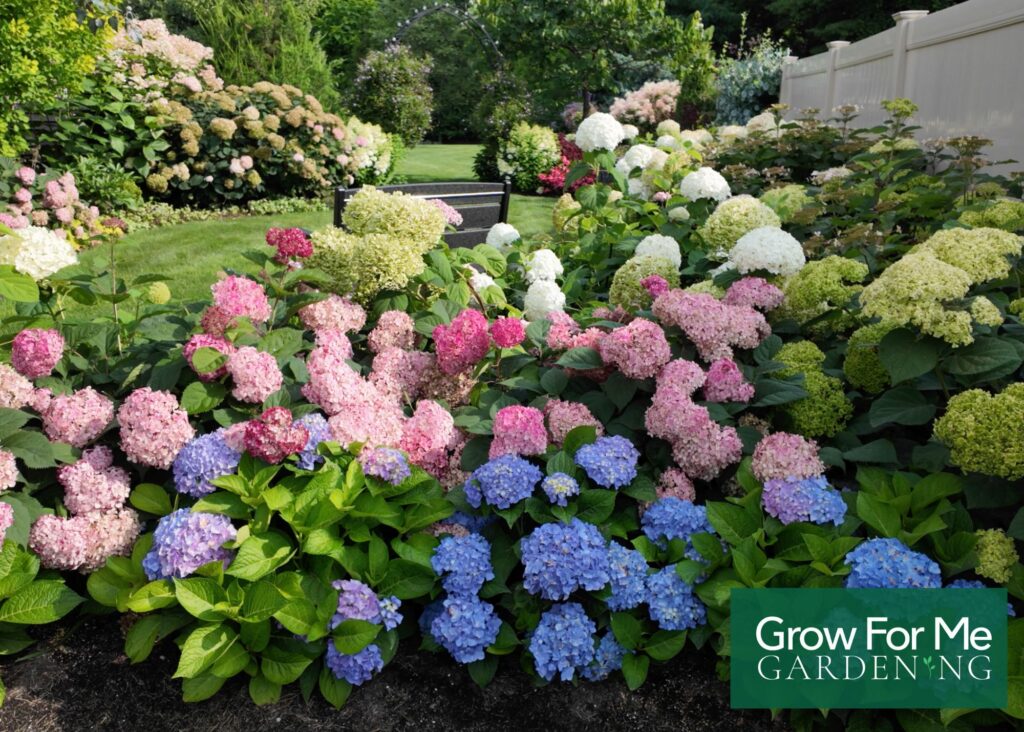
If you’ve followed us for any length of time, you know we’re a little obsessed with hydrangeas.
Here in our Zone 6a garden in Upstate New York, we’ve planted and tested more than 230 hydrangeas across our half-acre property. Over the years we’ve learned that not every hydrangea performs the same—even beautiful varieties don’t always earn a permanent spot.
Some bloom reliably year after year. Others struggle despite our best efforts.
Today we’re sharing the five hydrangeas we would plant again without hesitation, along with two varieties we’re removing from our garden and exactly why.
(Watch the full video above to see each hydrangea growing in our garden.)
When we recommend a hydrangea, we’re looking for much more than pretty flowers.
Our favorites consistently offer:
Because we garden in Zone 6a, we especially appreciate varieties that continue to perform after harsh winters.
Not sure what type of hydrangea you have?
Before you buy another one, download our FREE Hydrangea Identification Chart to quickly identify your hydrangea type and learn how to care for it correctly. (Insert Hydrangea ID Chart opt-in here.)
If you’re looking for a small hydrangea that delivers big color, Let’s Dance Blue Jangles is one of our absolute favorites.
Why we love it:
We’ve been able to achieve gorgeous blue blooms by slightly acidifying our soil. Even after our Upstate New York winters, this hydrangea reliably comes back and flowers beautifully.
Its compact size also makes it ideal for planting near walkways, foundations, or the front of garden beds.
If we could recommend just one large panicle hydrangea, Quick Fire Fab would be near the top of the list.
This Proven Winners variety improves on the original Quick Fire by producing fuller flower heads packed with large sterile florets.
Why we love it:
Because it blooms on new wood, late frosts, winter damage, or pruning mistakes won’t prevent flowering.
The creamy white blooms gradually blush pink as the season progresses, giving months of changing color in the landscape.
If you love unusual plants, Invincibelle Sublime deserves a spot in your garden.
Unlike traditional white or pink smooth hydrangeas, this variety produces vibrant lime green flowers that hold their color remarkably well.
Why it stands out:
We especially love using it as a transition plant because the green blooms pair beautifully with both bright and dark foliage nearby.
If there is one bigleaf hydrangea that has exceeded our expectations, it’s Let’s Dance Sky View.
We’ve planted these in a location that receives nearly full sun with supplemental watering, and they’ve performed exceptionally well.
Why we’re so impressed:
Even though our plants often die back during winter, the reblooming genetics allow us to enjoy flowers later in the season.
That’s a huge advantage for northern gardeners.
Want to grow hydrangeas like these in your own garden?
Our Hydrangea Handbook & Worksheets walks you through choosing the right hydrangeas, understanding bloom timing, pruning correctly, changing bloom color, and avoiding the most common mistakes we see every season.
Anyone who’s grown traditional smooth hydrangeas knows the frustration of giant flowers flopping after heavy rain.
That’s exactly what Incrediball Storm Proof was bred to solve.
Why we recommend it:
We’ve been amazed at how quickly these have grown.
What started as small plants last year have already multiplied in size, and pollinators absolutely love them.
If you want dramatic white blooms without staking your plants every summer, this is one to consider.
Just because a hydrangea is beautiful doesn’t mean it’s the right choice for every garden.
These two simply haven’t performed well enough for us.
Touff Stuff is a mountain hydrangea with beautiful lacecap blooms.
Unfortunately, after several seasons in our Zone 6a garden, we’ve seen almost no flowering.
The good news?
Newer mountain hydrangea varieties like Tiny Tuff Stuff®, Tuff Stuff™ Ah-Ha®, and Tuff Stuff™ Top Fun® have improved reblooming performance, and we’d be much more likely to try one of those instead.
This variety caught our attention because of its striking black stems and white lacecap flowers.
Unfortunately, ours has remained small and has produced very few blooms despite being established for several years.
At this point, we’d rather replace it with a newer variety that delivers reliable flowers throughout the season.
Sometimes even interesting collector plants simply don’t earn a permanent place in the garden.
There are plenty of hydrangeas that almost made our top five.
Some of our current favorites include:
As breeders continue improving hydrangeas, we’re excited to keep testing new introductions and sharing our honest results with you.
After growing hundreds of hydrangeas, one thing has become very clear:
The right hydrangea makes gardening easier and far more rewarding.
Whether you’re looking for reliable blooms after cold winters, colorful reblooming varieties, or sturdy plants that hold up through summer storms, these five have consistently earned their place in our garden.
And remember—it’s okay to replace plants that simply aren’t performing. Gardening is always evolving.
If you’re building your own hydrangea collection, start with proven performers, then branch out as you gain experience. And be sure to check out our full Hydrangea Guide blog post and video for tons of ideas on growing, pruning, and designing a hydrangea garden.
Happy gardening!
Join our gardening journey and grow alongside us. From seed starting to full garden tours, we share tips, inspiration, and the joy of growing beautiful spaces.
We respect your privacy and will never share your information. Thanks for growing with us!
Get seasonal tips, behind-the-scenes from our garden, and be the first to know what we’re planting, pruning, and loving.
As a thank you, we’ll send you our favorite tried-and-true plants — the ones we grow in our own garden.