This post may contain affiliate links. If you purchase through these links, we may earn a small commission at no additional cost to you. We only recommend products we use and love in our own garden.
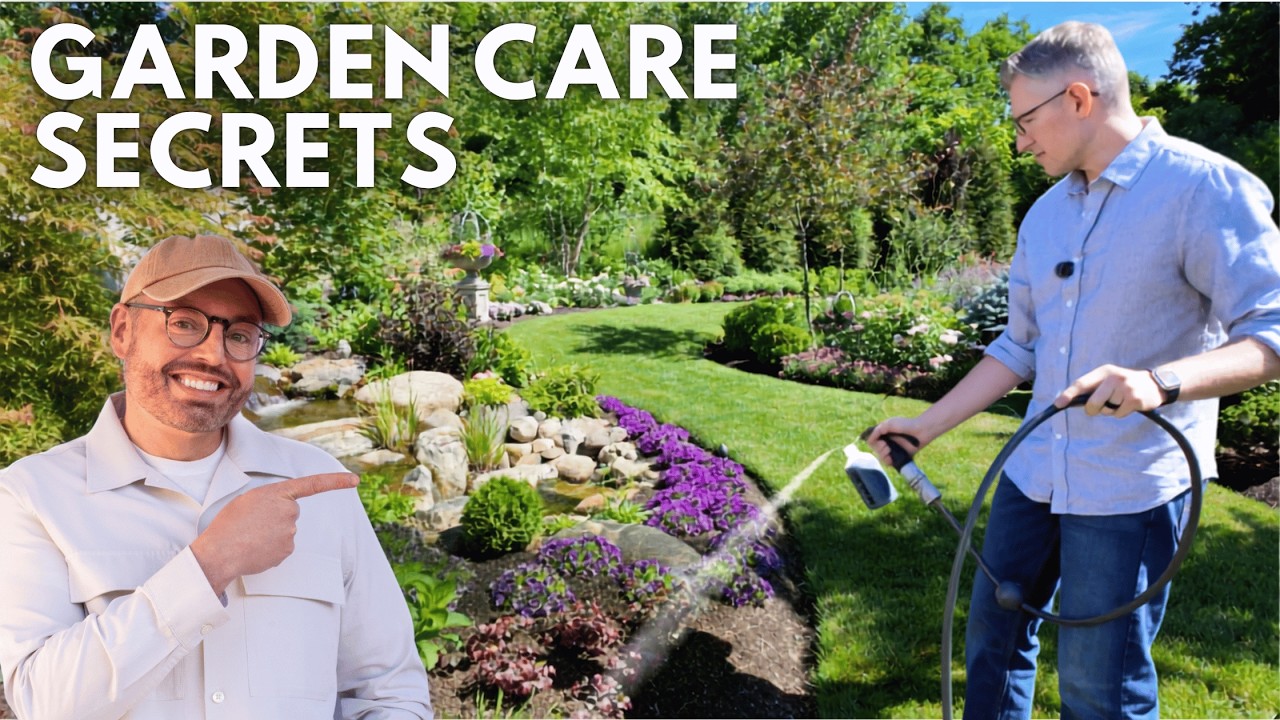
The first day of summer marks a shift in the garden. Spring planting is mostly behind us, annuals are taking off, roses are blooming, hydrangeas are setting buds, and maintenance becomes the key to keeping everything looking its best.
One of the questions we get asked most often is: How do you maintain such a large garden throughout the summer?
The truth is that there isn’t one secret. It’s a collection of simple weekly tasks that keep plants healthy, encourage repeat blooms, and help the garden stay beautiful without feeling overwhelming.
Today we’re sharing our most frequently asked summer garden maintenance tips.
Healthy annuals need regular feeding to keep producing flowers all season long.
Our garden gets a nutrient boost each spring when we apply several inches of compost as mulch. As worms and microorganisms break down that compost, they continually improve the soil.
For hungry annuals, however, we supplement with a water-soluble fertilizer throughout the growing season. We love this Premium Water Soluble Fertilizer from Proven Winners.
We typically fertilize annual containers and in-ground annuals once per week. Consistency is more important than complexity. A simple weekly feeding schedule helps keep plants lush, vigorous, and blooming continuously.
For our bigleaf hydrangeas (Hydrangea macrophylla) and mountain hydrangeas (Hydrangea serrata), we use a fertilizer specifically designed to encourage blue flowers (Jack’s Hydrangea Blue).
Products containing aluminum sulfate and soil-acidifying ingredients can help intensify blue coloring in varieties capable of changing color.
Apply around the root zone only and avoid spraying foliage.
Keep in mind that this only works on hydrangeas that naturally shift between pink and blue. White hydrangeas and panicle hydrangeas will not change color. We talk a little more about getting blue hydrangeas in this post: Our Secret to Blue Hydrangeas and Nonstop Summer Roses.
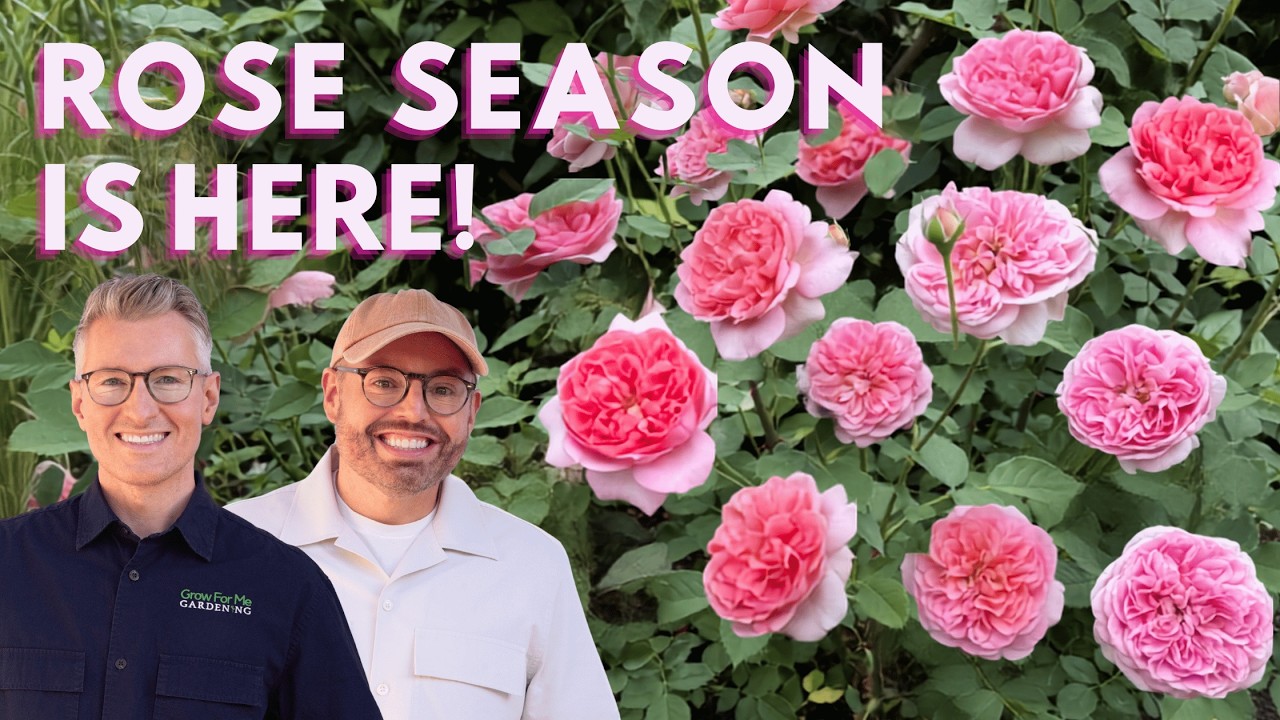
Roses are heavy feeders and benefit from additional nutrients during the growing season.
This year we’re using a fertilizer formulated specifically for roses and flowering shrubs. We like to mix it with compost or planting soil and apply it as a top dressing around the base of each plant.
Organic fertilizers release nutrients slowly, helping support both plant growth and soil health.
Want more on roses? Check out these posts:
Our Favorite Low-Maintenance Roses
How to Plant Container Roses
One of the most noticeable differences between a tidy garden and an overgrown garden is the edge.
Each spring, we create fresh edges around the beds using a hard-edging tool. Throughout the season, we maintain them using a string trimmer.
The key is consistency.
After mowing, spend 10–15 minutes touching up the garden edges. Small maintenance sessions prevent major cleanup projects later.
Don’t worry if you accidentally nick a few plants while learning. It gets easier with practice.
Many flowering perennials respond beautifully to a midsummer haircut.
Some of our favorites include:
Cut plants back after flowering to encourage fresh growth and often a second round of blooms.
Some perennials can be cut nearly to the ground, while others benefit from being trimmed just above the foliage canopy.
The best approach depends on the plant and how attractive the foliage remains after blooming.
The secret to preventing floppy perennials isn’t what you do in summer—it’s what you do in spring.
Delphiniums, meadow rue, peonies, and other tall growers should be supported before they get tall enough to fall over.
Plant supports, peony cages, stakes, and soft garden ties all work well. We love these garden stakes from Vego and FARMYARN for tying.
Once a plant has already flopped, it’s much harder to make it look natural again.
There are several ways to deadhead roses.
For large clusters of blooms, we typically wait until the entire spray has finished flowering. Then we trace the stem down to the first set of five leaves and make our cut just above that point.
This encourages strong new growth and future flowers.
Later in the season, we stop deadheading certain roses so they can develop beautiful hips for fall interest.
Climbing plants grow quickly during summer.
A few minutes of training every week can make a huge difference.
Soft garden ties help guide clematis and climbing roses where you want them without damaging stems.
For climbing roses, horizontal training is especially valuable because it encourages more flowering shoots along the cane.
One of the most common questions we receive is whether compost mulch causes weeds.
In our experience, well-aged, screened compost does not create more weeds than traditional bark mulch.
The key is using high-quality compost that has been properly aged and processed.
Benefits include:
Because we garden in sandy soil, compost mulch has been one of the most effective improvements we’ve made.
Prevention is easier than treatment.
We routinely inspect roses, petunias, calibrachoa, and other susceptible plants throughout the growing season.
Common garden pests we watch for include:
When treatment becomes necessary, we prefer starting with lower-impact options before moving to stronger controls.
Regular monitoring helps catch problems before they become serious.
If there’s one lesson we’ve learned over the years, it’s this:
Don’t fight your garden.
Pull weeds when you see them. Deadhead when you have time. Fertilize consistently. Enjoy the flowers while they’re blooming.
Gardens are living spaces, not perfection projects.
A little attention each week goes a long way, and sometimes the best thing you can do is slow down and enjoy the beauty you’ve already created.
Happy gardening!
Join our gardening journey and grow alongside us. From seed starting to full garden tours, we share tips, inspiration, and the joy of growing beautiful spaces.
We respect your privacy and will never share your information. Thanks for growing with us!
Get seasonal tips, behind-the-scenes from our garden, and be the first to know what we’re planting, pruning, and loving.
As a thank you, we’ll send you our favorite tried-and-true plants — the ones we grow in our own garden.