The challenge is that the answer often depends on what type of hydrangea you have, which is why proper identification matters so much.

Hydrangeas are one of the most popular shrubs you can grow in the garden.
They produce beautiful flowers, create structure in garden beds, and can thrive for decades when planted in the right place.
But they’re also one of the most confusing plants for gardeners.
We hear the same questions again and again:
Why isn’t my hydrangea blooming?
When should I prune hydrangeas?
Why did it bloom last year but not this year?
What type of hydrangea do I even have?
Over the years we’ve grown more than 200 hydrangeas in our Zone 6A garden, and we’ve learned that almost every hydrangea problem comes back to one simple thing:
Understanding the type of hydrangea you’re growing.
Once you know the type, pruning, care, and garden placement become much easier.
This post covers the foundations, but if you want something you can actually use while you’re standing in your garden, we created a more complete resource:
Eric & Christopher’s Hydrangea Handbook
Inside the handbook, we go deeper with:
Visual identification pages so you can quickly recognize your hydrangea type
Exact pruning approaches by type (with timing and method clearly laid out)
Design guidance showing how we layer hydrangeas in real garden beds
Variety recommendations that perform reliably in real conditions
Quick-reference charts you can come back to throughout the season
For a limited time it also includes our Hydrangea Garden Planning Worksheets to help you track bloom timing, pruning, and layout.
👉 Download the Hydrangea Handbook here
There are five main types of hydrangeas grown in North American gardens.
Each one behaves differently — especially when it comes to pruning and bloom timing.
Understanding these differences is what prevents most common mistakes.
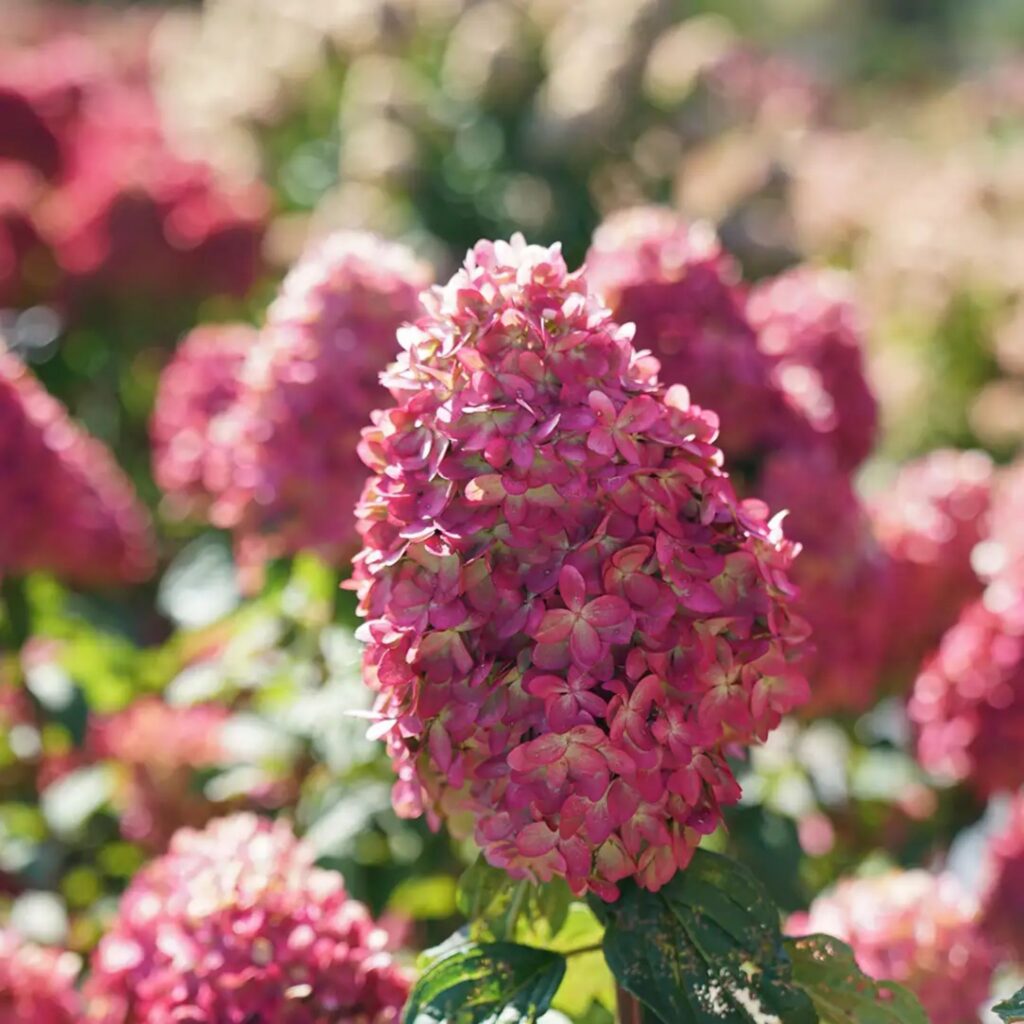
Panicle hydrangeas are some of the most reliable hydrangeas you can grow.
They have cone-shaped blooms and strong upright growth, making them ideal for structure in the garden.
They bloom on new wood, which means they form flowers on the current season’s growth.
That makes them very forgiving when it comes to pruning.
They typically bloom mid to late summer and often transition from white to pink as the season progresses.
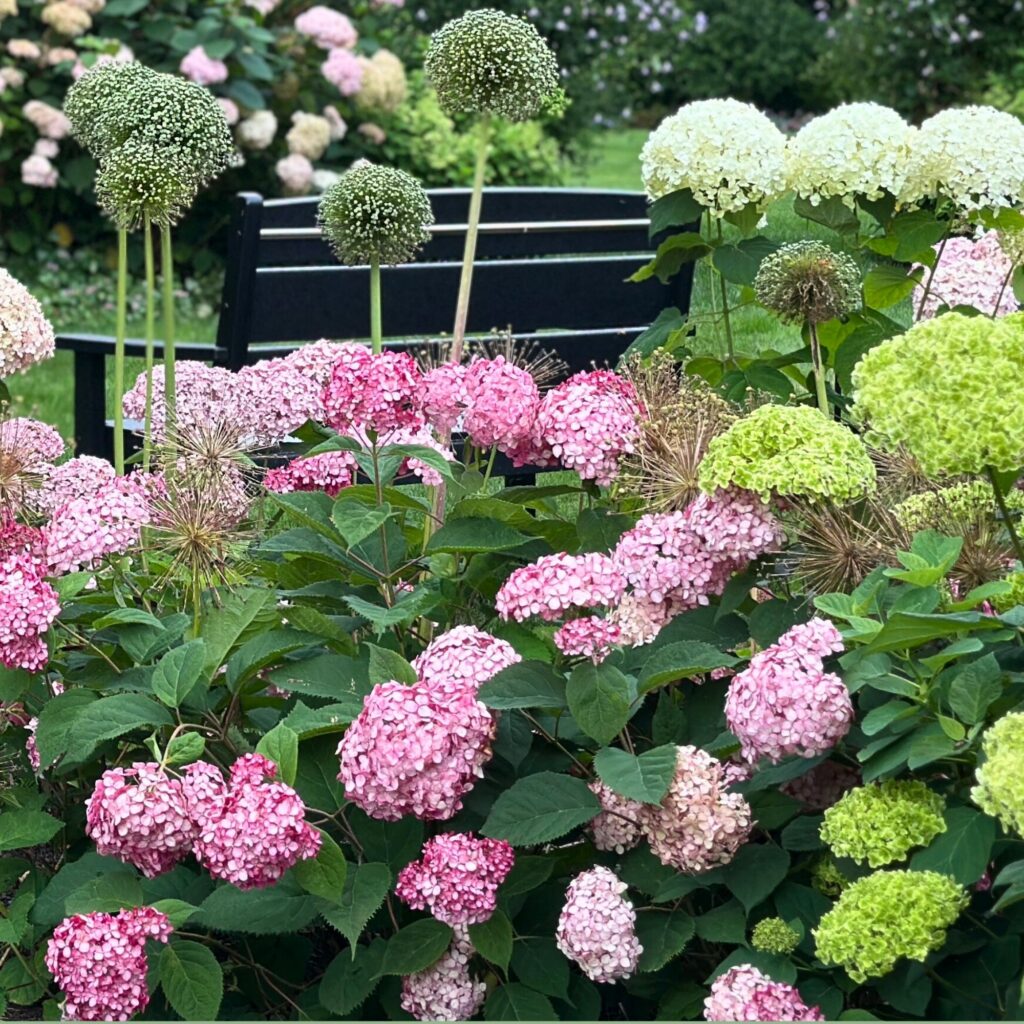
Smooth hydrangeas produce large, rounded blooms and create a softer look in the garden.
They are also native to the eastern United States.
Like panicle hydrangeas, they bloom on new wood, making them easy to maintain.
They bloom earlier in the season and work well when planted in groups to create fullness.
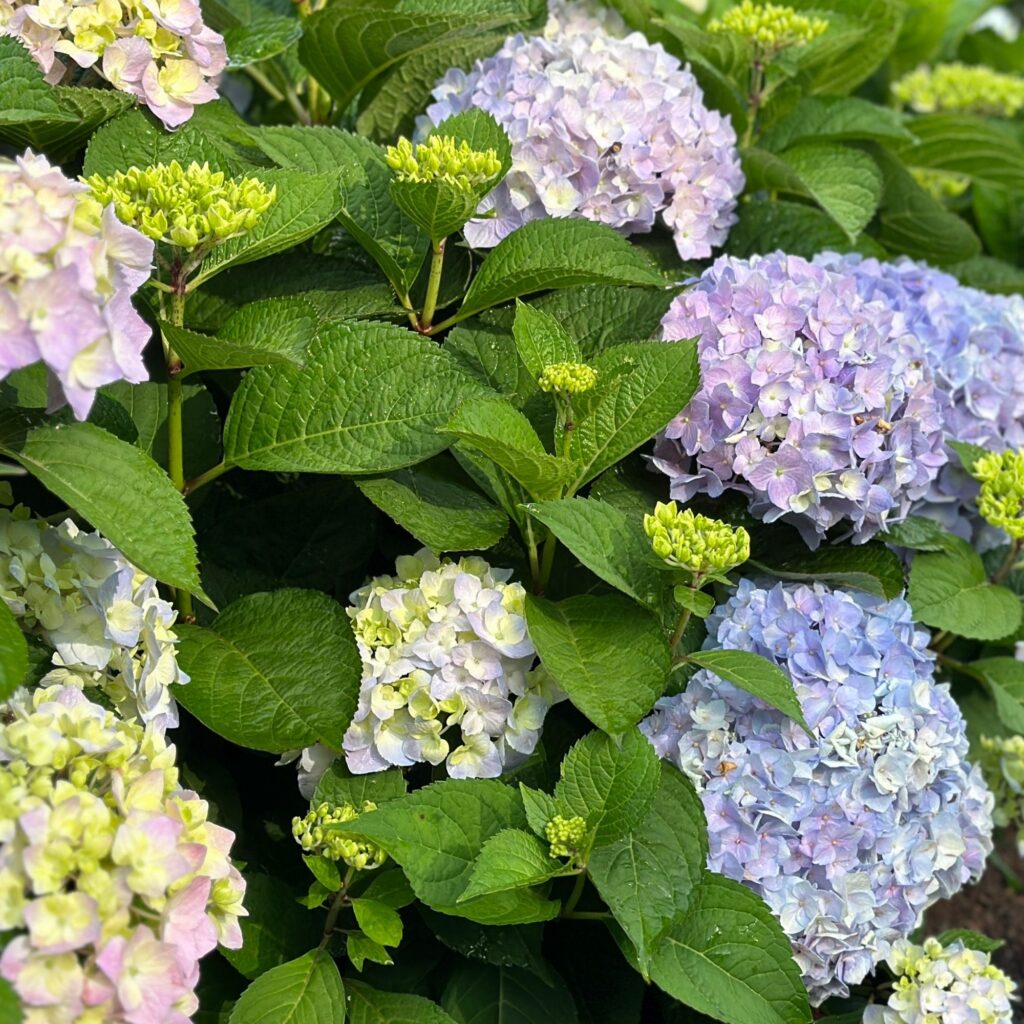
Bigleaf hydrangeas are the ones most people recognize — especially the blue and pink varieties.
These are also the hydrangeas that can change color depending on soil conditions.
Most bloom on old wood, meaning the flower buds are formed the year before.
This is where many gardeners run into problems — pruning at the wrong time can remove those buds before they bloom.
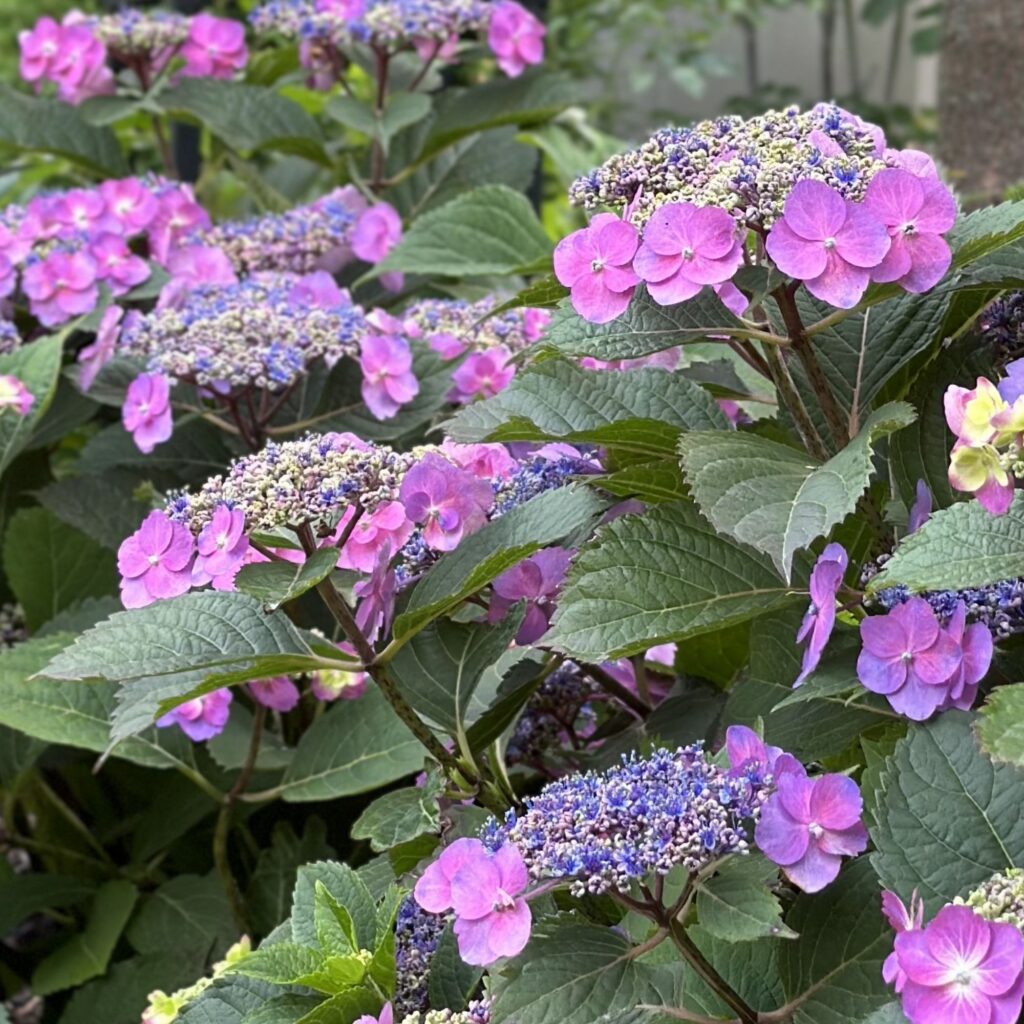
Mountain hydrangeas are similar to bigleaf hydrangeas but tend to be more cold tolerant.
They often have lacecap-style blooms and a more delicate appearance.
Some newer varieties bloom on both old and new wood, which can make them more reliable in colder climates.
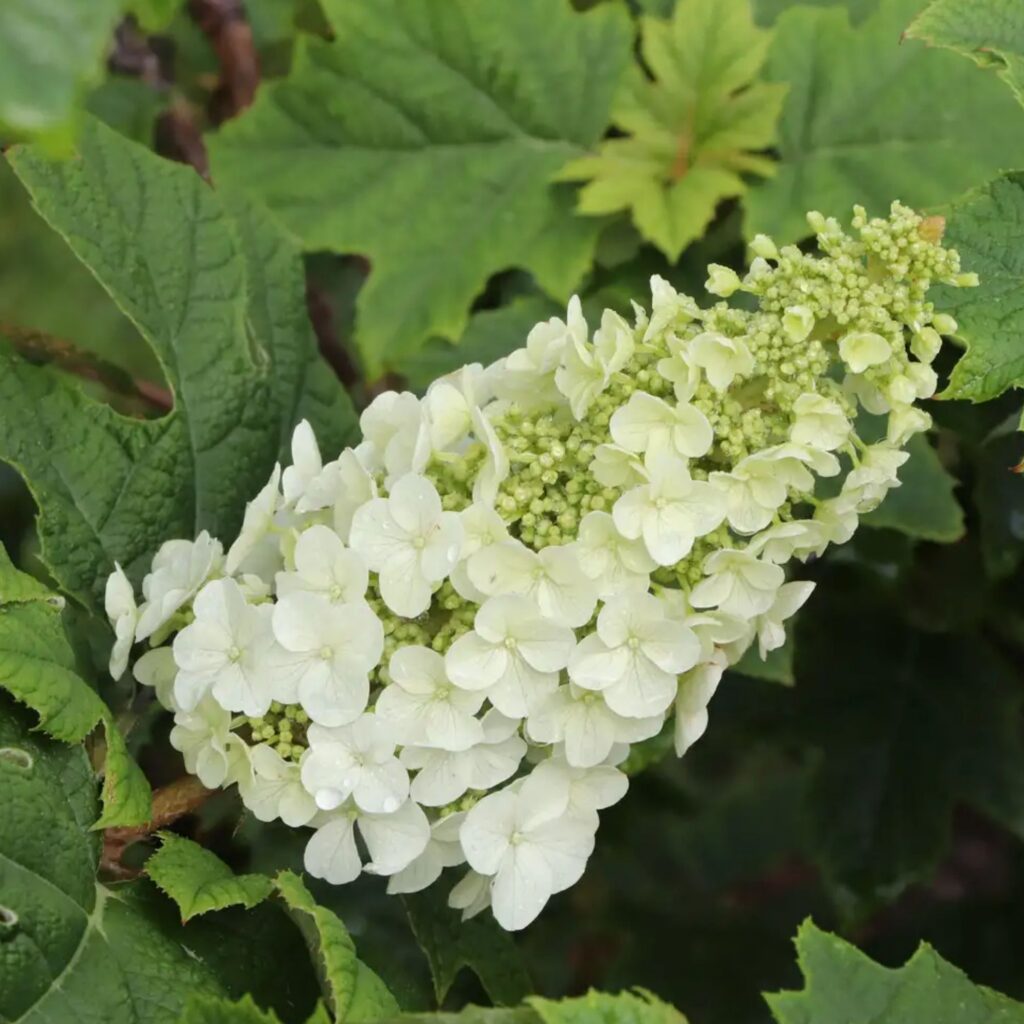
Oakleaf hydrangeas are known for their bold foliage and strong seasonal interest.
They produce cone-shaped blooms and have beautiful fall color.
They bloom on old wood and generally require very little pruning.
One of the most common questions we hear is: Why isn’t my hydrangea blooming?
There are a few key reasons this can happen:
• Pruning at the wrong time — especially for old-wood hydrangeas, which can lose their blooms if they’re cut back too early
• Late spring frost — cold snaps can damage developing buds before they open
• Not enough sunlight — hydrangeas often need more sun than people expect to produce strong blooms
• Young plants — it can take a few seasons for hydrangeas to fully establish and flower reliably
The challenge is that the answer often depends on what type of hydrangea you have, which is why proper identification matters so much.
Hydrangeas can do more than just bloom — they can shape the entire structure of your garden.
In our own garden, we use them intentionally:
Panicle hydrangeas for structure and height
Smooth hydrangeas for softness and volume
Bigleaf hydrangeas for color near seating areas
Mountain hydrangeas for texture and layering
Oakleaf hydrangeas for natural transitions and seasonal interest
When layered together, hydrangeas can carry a garden from early summer through fall.
Most hydrangea frustration doesn’t come from the plant — it comes from not having a clear system to follow.
That’s exactly why we created the handbook.
This post gives you the big picture, but the handbook gives you:
A clear way to identify your hydrangea quickly
A step-by-step pruning approach by type
A visual reference you can use in real time
A way to track what’s happening in your garden year to year
It’s designed to take what feels confusing and make it simple.
👉 Download the Hydrangea Handbook here
Hydrangeas don’t have to be confusing.
Once you understand the type, how it grows, and when it blooms, everything starts to fall into place.
And when they’re used intentionally, they become one of the most rewarding and reliable parts of the garden.
Thanks for growing with us.

Join our gardening journey and grow alongside us. From seed starting to full garden tours, we share tips, inspiration, and the joy of growing beautiful spaces.
We respect your privacy and will never share your information. Thanks for growing with us!
Lorem ipsum dolor sit amet, consectetur adipiscing elit. Ut elit tellus, luctus nec ullamcorper mattis, pulvinar dapibus leo.