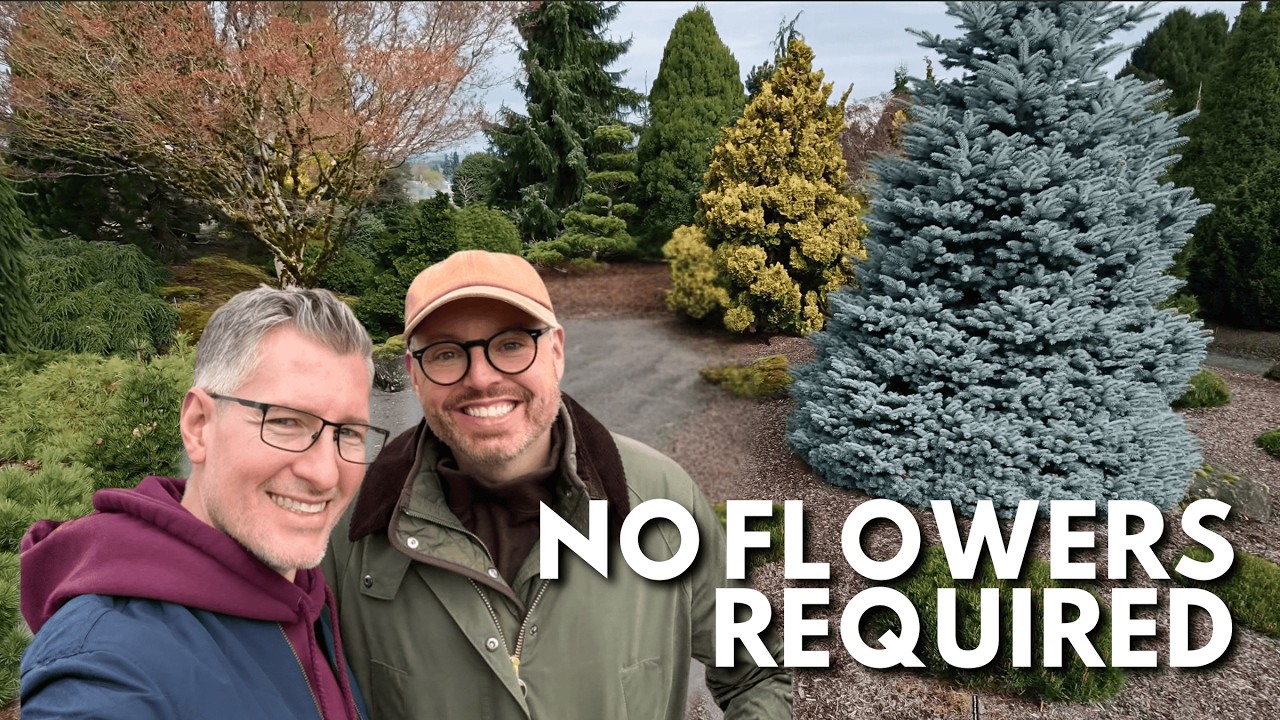
There’s a common misconception in gardening that flowers are what make a garden beautiful.
But after visiting Iseli Nursery in the Pacific Northwest, we can confidently say—that’s not true.
This garden is proof that you can create something absolutely stunning using evergreens, texture, and color alone.
And the best part? So many of these ideas can translate directly to our Zone 6A garden in upstate New York.
Let’s walk through what we saw—and what evergreen design ideas you can take for your own space.
One of the biggest takeaways from this garden is how much structure evergreens provide.
Plants like:
…are doing the heavy lifting year-round.
Even without blooms, the garden feels full, layered, and intentional.
One standout for us was the Sherwood Compact Mugo Pine—a hardy, compact evergreen that:
We planted one near our bench at home, and it’s already becoming a focal point.
👉 If you’re building a garden from scratch, start here. Structure first, flowers second.
Something Iseli does incredibly well is pairing color in unexpected ways.
One combination we kept seeing:
Blue + Gold + Green
Think:
It’s not something we naturally would have paired—but it works beautifully.
Why?
Because:
👉 This is something you can easily replicate—even in a small garden bed. Want to see how gorgeous some of these look even in the winter? Check out our Winter Garden Tour.
If there’s one theme throughout the entire garden, it’s this:
Texture replaces flowers.
We saw:
When layered together, it creates visual interest from every angle.
A few unforgettable examples:
👉 The takeaway: mix textures aggressively. That’s what makes a garden feel dynamic.
This garden completely changed how we think about pruning.
Many of these plants:
And honestly—it makes them more beautiful.
For example:
👉 If you’ve been hesitant to prune, this is your sign to start. And if you’re looking for a great set of pruners to do the job, check out our favorite Okatsune Bypass Pruners.
This was a big “aha” moment.
Plant tags often show a “garden size”—but that’s usually around 10 years of growth.
The reality?
These plants keep growing.
So instead of just looking at size:
This is especially important with conifers, which can slowly outgrow their space if not planned properly.
Most of the plants in this garden thrive in:
Full sun + good drainage
Even though some can tolerate shade, the best color and structure come from proper light exposure.
One challenge they mentioned:
👉 Balance is key: structure, but not too much canopy.
One of our favorite parts of this garden is how it changes throughout the year.
For example:
A great example is the First Flame Japanese Maple, which:
👉 This is how you build a garden that looks good 12 months a year.
Throughout the garden, there are standout plants that act as focal points.
Things like:
These anchor the space and give your eye somewhere to land.
👉 Even in a small garden, one statement plant can make a huge impact.
Walking through this garden reinforced a few big ideas for us:
We’re already thinking about how to bring more of this into our own space—especially more blue and gold combinations and interesting textures.
If you’re building or refreshing your garden this season, start with these principles and build from there.
You’ll end up with something that looks good—not just in summer—but all year long.
👉 Ready to add those flowers? Check out our Hydrangea Handbook here!
Join our gardening journey and grow alongside us. From seed starting to full garden tours, we share tips, inspiration, and the joy of growing beautiful spaces.
We respect your privacy and will never share your information. Thanks for growing with us!
Get seasonal tips, behind-the-scenes from our garden, and be the first to know what we’re planting, pruning, and loving.
As a thank you, we’ll send you our favorite tried-and-true plants — the ones we grow in our own garden.